This is default featured slide 1 title

Go to Blogger edit html and find these sentences.Now replace these sentences with your own descriptions.This theme is Bloggerized by Lasantha Bandara - Premiumbloggertemplates.com.

This is default featured slide 2 title

Go to Blogger edit html and find these sentences.Now replace these sentences with your own descriptions.This theme is Bloggerized by Lasantha Bandara - Premiumbloggertemplates.com.

This is default featured slide 3 title

Go to Blogger edit html and find these sentences.Now replace these sentences with your own descriptions.This theme is Bloggerized by Lasantha Bandara - Premiumbloggertemplates.com.

This is default featured slide 4 title

Go to Blogger edit html and find these sentences.Now replace these sentences with your own descriptions.This theme is Bloggerized by Lasantha Bandara - Premiumbloggertemplates.com.

This is default featured slide 5 title

Go to Blogger edit html and find these sentences.Now replace these sentences with your own descriptions.This theme is Bloggerized by Lasantha Bandara - Premiumbloggertemplates.com.

Tinder to add video dating next quarter, after slowing user growth due to coronavirus

Tinder will add a video dating feature in the second quarter of this year, parent company Match announced on Tuesday as part of its Q1 2020 earnings report. The company also detailed the coronavirus impact which slowed Tinder user growth in the quarter, as social distancing requirements and government lockdowns went into effect.

Match didn’t go into detail about its plans for video dating, but noted it has been testing the waters with video in its Plenty of Fish app. In the quarter, it accelerated the rollout of a one-to-many live streaming feature that has so far exceeded its expectations, the company said,

“As daters demonstrated strong willingness to video-date, our product and engineering teams around the world mobilized quickly to deploy one-to-one video chat capabilities on many of our platforms,” wrote Match Group CEO Shar Dubey, in the letter to shareholders.

Match-owned Hinge also introduced a video call feature called Date from Home this month.

But the company’s flagship dating service Tinder had not yet embraced video — despite that fact that its direct competitor Bumble has offered video for a year, and Facebook is launching virtual dating via Messenger for its Facebook Dating users.

Match explained the reason for its hesitance on video during its earnings calls with investors, saying that video features had been tried over the years, but never saw much adoption. The company believes that will change now, as “users are being forced to use it.” Users will see the benefits and likely continue to use video when the pandemic is over, the company said.

Overall, Match had a solid Q1 with revenue growth of 17% year-over-year to $545 million, and earnings per share growth of 31% to 55 cents. Both beat Wall St. expectations of $544.9 million and 34 cents per share, respectively.

But there were numerous signs of how the coronavirus took its toll on online dating.

Users’ unwillingness to go on in-person dates — the ultimate goal of online dating —  led to Tinder seeing first-time sequential subscriber declines from February to March, before things started to stabilize in April, Match said.

The majority of Match’s non-Tinder brands saw sequential declines in first-time subscribers in March as well, the company added.

Tinder ended the quarter with 6 million subscribers, up from 5.9 million in December 2019 — meaning it only added 100,000 new subscribers in the quarter. In the year-ago quarter, it had added 384,000 paid users. Tinder’s average revenue per user (ARPU) grew just 2%, mainly due to purchases of a la carte features.

The company also admitted it was “seeing some headwinds to ARPU” on Tinder due to fewer of those a la carte purchases and shifts to lower-priced subscriptions.

Despite these challenges, Tinder grew its direct revenue by 31% year-over-year and saw 28% year-over-year growth in subscribers. Non-Tinder brands saw direct revenue growth of just 2% year-over-year, and flat subscriber growth, by comparison.

“Tinder clearly remains a go-to app for meeting new people, which has become an even more critical service with so many people stuck at home,” noted Dubey, optimistically.

Like many other companies, Match declined to offer a full year financial outlook, saying there were too many unknowns with regard to the pandemic.


from Social – TechCrunch https://ift.tt/2zcskKS
via IFTTT
Pinterest rolls out new board features including notes, dates and section suggestions

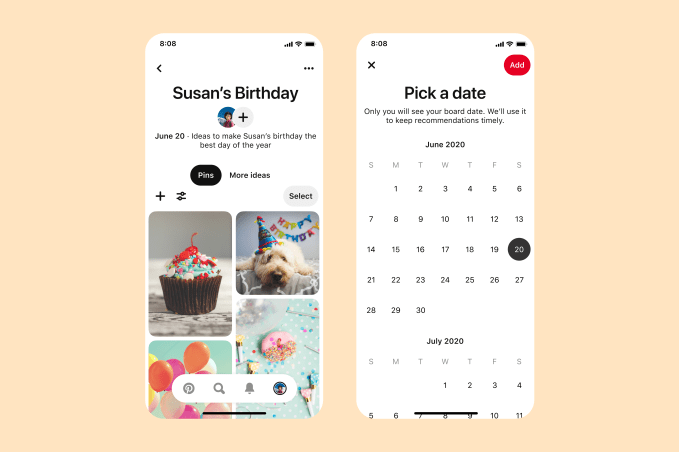
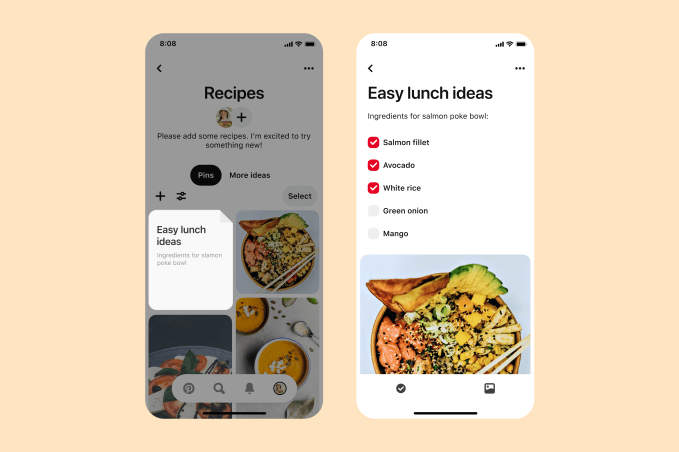
Pinterest is introducing new features that make it easier for those planning recipes, virtual events and other quarantine activities. These include the ability to add a date or notes to a board as well as automated ways to better organize your pins on a given board, with the aid of machine learning technology.

The company has seen increases in particular types of activities on its platform amid the quarantine. For example, it’s seen a more than 50% increase in people using the site to plan virtual events — like virtual birthday parties, baby showers or virtual educational activities.

Meanwhile, it has also seen people planning ahead for their post-quarantine projects, as well as an overall 60% increase in the number of boards created versus the same time last year. Engagement with boards is also up nearly 75% on a year-over-year basis and up nearly 50% month-over-month.

The addition of board notes will allow Pinterest users to annotate their saves with personal notes — like adding a list of ingredients accompany a pinned recipe, a list of tasks for a project, a to-do list or anything else they want to note.

Also new is the ability to add a date to a board. This can help with project planning or to just keep boards better organized by dates. When projects wrap, it may be easier to find the old boards to archive if they have a date attached.

Finally, Pinterest is upgrading its board technology to suggest sections to add to a board.

For example, if you have a fairly broad topic — like “kids’ activities” — Pinterest may now recommend organizing the pins into sections like “art projects,” “outdoor games” and others. And when you’re starting a new board, Pinterest may suggest sections to add as soon as you save your first pin.

The company says it’s using its data on billions of saved ideas combined with machine learning and Pinterest’s own PinSage technology, in order to determine how pins should be grouped. This problem is challenging, Pinterest notes, because it has to accurately cluster together similar pins and predict how a Pinner may want to organize their board.

These new board features are rolling out globally starting today on web, iOS and Android.

The new features are meant to help Pinterest respond to the changes in consumer behavior since the COVID-19 pandemic, where people had temporarily turned away from planning for travel or in-person events, and instead are using their boards to organize for quarantine-related activities, like a child’s homeschooling or virtual events.

The launches follow Pinterest’s report this week of a solid Q1 amid the COVID-19 pandemic. The company grew its revenue 35% year-over-year to $272 million and grew its user base 26% year-over-year to 367 million, beating projections for both. However, it reported a loss of 10 cents per share, versus the expected loss of 9 cents per share.

But Wall Street wasn’t happy with Pinterest’s user growth, CNBC reported, which was up 6% year-over-year in the U.S., compared with 8% in the fourth quarter. Overall, Pinterest’s growth of 26% was the same annualized growth rate it saw in the fourth quarter — in other words, flat. This was unexpected, given Pinterest’s claims of pandemic-related record usage in March and the gains other social platforms have seen, including Facebook and Snapchat.

Pinterest also warned of a tough road ahead, due to pandemic-related advertising declines.


from Social – TechCrunch https://ift.tt/2zZu8XW
via IFTTT

IRL, the calendar app for virtual events, launches a web product

IRL, the recently pivoted calendar app that aggregates live virtual events, has today launched a web version of the platform.

The company, which has $11 million in funding from Goodwater Capital, Founders Fund and Floodgate, started as a social planning app that helped folks find each other in the real world, based on interest and geography.

Over time, the company realized the power of the calendar itself. No one has successfully made the calendar social, explained cofounder Abe Shafi. Where you can follow someone’s music on SoundCloud or follow their updates on Twitter, how can you follow their events?

Pre-pandemic, those events were physical events, with people communing in a venue. But the coronavirus may have split open a much wider world for the startup, which recently pivoted into virtual events.

Through API partnerships with YouTube, Twitch and Spotify, as well as user-generated content, IRL (which now stands for In Remote Life) wants to aggregate all the virtual events across the globe into a curated, categorized home page. That may include an esports tournament, a virtual concert, a Zoom cocktail party or a webinar.

Critical to this push is a web presence, which launches today. Folks can follow content producers, or simply get alerts on individual events. Importantly, IRL is also launching an ‘add to calendar’ button that content producers can add to their own websites.

For now, that ‘add to calendar’ button embed is only available to select partners, with a waitlist for others interested in adding the button to their website.

Cofounder and CEO Abe Shafi explained the company’s monetization plans with TechCrunch, though warned that the current focus is gaining a critical mass before flipping on the monetization switch.

“The way we think about making money is around monetizable intent,” said Shafi. “When you’re on Facebook or Instagram, your monetizable intent is pretty low because you’re interested in what your friends are up to. Whereas, when you’re on Google your monetizable intent is really high because your intent is to find something and go somewhere else. Our monetizable intent is much closer to a Google search than it is to a Facebook or an Instagram in the sense that people come to IRL to go to other people’s content that they’re monetizing in one way or another.”

Importantly, content producers must use the app to add their own events to the platform, but Shafi told TechCrunch that the company has plans to add that same functionality to the web product.

When asked whether IRL would get into content creation itself, Shafi said that the premise of that “gives him a headache.”

“We want to be the bank,” said Shafi. “So many great people are creating content. Getting into the content business is its own beast. If we can be seen as the best place to discover it all, that’s a huge win.”


from Social – TechCrunch https://ift.tt/2SE9vHu
via IFTTT

Discover is Facebook’s new effort to help people access any website in text format

Facebook has a new connectivity app called Discover to help those who can’t afford to get online access information on the web.

The service, available through mobile web and Android app, allows users to visit any website in text format (no video, images, audio and other elements that eat up large amounts of data) and consume a few megabytes of internet data.

For Discover, which is part of the company’s Free Basics initiative, Facebook is working with mobile operators in Bitel, Claro, Entel, and Movistar. Discover is currently available in Peru, where it is in the initial testing phase.

In Peru, Discover is offering 10MB of free data to users each day. A Facebook spokesperson told TechCrunch that the partner mobile operator determines the daily data allowance, and it anticipates operators in other countries where Discover would be tested to offer up to 20MB each day.

But nothing is set in stone. “We’ll be assessing how people are using Discover and the amount of daily data more during the trials and may work with our operator partners on adjustments going forward,” the spokesperson said, adding that mobile operators will also determine whether support for photos could be added to Discover.

Eliminating support for videos and images means that Discover users would be able to load dozens of websites in a day without running out of their data allowance.

Discover is the latest of a handful of internet connectivity efforts that Facebook has rolled out in recent years. The company maintains Internet.org, which offers unfettered access to dozens of websites in dozens of markets; and Express WiFi, which allows neighbourhood stores to sell small sachet of internet plans to users, in India. Facebook has partnered with more than 10,000 merchants and stores in the country to sell these data plans.

On the Internet.org website, the company also lists Connectivity Lab, another effort that is part of Free Basics initiative through which it is “exploring a variety of technologies, including high-altitude long-endurance planes, satellites and lasers” to bring more people online. At least one of those tests has been discontinued.

“During the coronavirus public health crisis, we believe it is particularly important to explore ways to help people stay connected and to increase access to health information and other resources on the internet. As part of our ongoing work to connect people to accurate health information, coronavirus health resources will be highlighted on the Discover homepage,” said Yoav Zeevi, a product manager at Facebook.

Facebook’s Free Basics initiative, which has helped tens of millions of people access internet, has also received scrutiny for its approach and some unintended consequences. Internet.org was banned in India after the local authority in the world’s second largest internet market found that the program violated net neutrality principles.

Zeevi said the company has heard the feedback and responded by allowing people to browse all websites. “Our work on Discover has been informed by our broader efforts — including our participation in the Contract for the Web — to expand connectivity and access to the open web while continuing to protect privacy,” he said.

Critics have argued that programs such as Internet.org, which has been discontinued in some additional markets, have also fuelled violence in real life.

As Facebook expands its connectivity efforts, some other companies have scaled down their initiatives. Earlier this year, Google discontinued its free Wi-Fi program called Station that offered internet access in more than 400 railway stations in India, and was available at public places in handful of other markets.

In 2018, Wikimedia shut down Wikipedia Zero, a program that allowed more than 800 million people to access the online encyclopaedia in 72 countries for free.


from Social – TechCrunch https://ift.tt/2WynIGN
via IFTTT

Twitter rolls out changes to threaded conversations following tests in its prototype app, twttr

Twitter announced today it’s introducing a new layout for replies that will use lines and indentations to make it easier to understand who you’re replying to and how the conversation is flowing. The company will also test putting engagement actions — including likes, Retweet and reply icons — behind an extra tap to make replies to conversations easier to follow.

These features have been in testing for just over a year in Twitter’s prototype app, twttr, affectionately dubbed “little T” internally at the company.

The app was introduced at the Consumer Electronics Show in January 2019, as a way for Twitter to try out new ideas in space outside its public network. Twitter wanted to understand if an updated user interface would help people to better follow the conversations taking place on its platform — particularly those longer threads where the original poster also participates in the back-and-forth, and users end up replying to the wrong comment.

In its prototype app twttr, Twitter tried out a variety of styles, including, at one time, a design where the individual responses were more rounded — similar to chat bubbles.

The design that’s stuck around the longest, however, is the one that’s now making its public debut on Twitter.com and Twitter’s iOS app.

It involves branching lines that connect the different parts of the conversation threads together. The lines are more subtle than the chat bubbles had been, appearing as a lighter gray when Twitter’s default white theme is applied. Extra replies are also hidden beneath the “Show replies” label, which you have to tap to continue to read through a given thread.

The overall experience is something that’s more akin to a discussion board site, like Reddit.

In addition to the branching lines, the idea to hide Twitter’s engagement buttons was also something originally tested in twttr.

The company said in January 2020 that it intended to soon bring twttr’s experiments in threaded conversations to its main app.

“We’re taking all the different branches — all the different parts of the conversation — and we’re making it so it’s all in one global view,” explained Suzanne Xie, Twitter’s head of Conversations, speaking to reporters at CES 2020 earlier this year. “This means you can easily understand, and get a pulse of what’s happening in the conversation,” she added.

Twitter says the features will initially roll out to a portion of Twitter users on iOS and the web.


from Social – TechCrunch https://ift.tt/3fhli86
via IFTTT

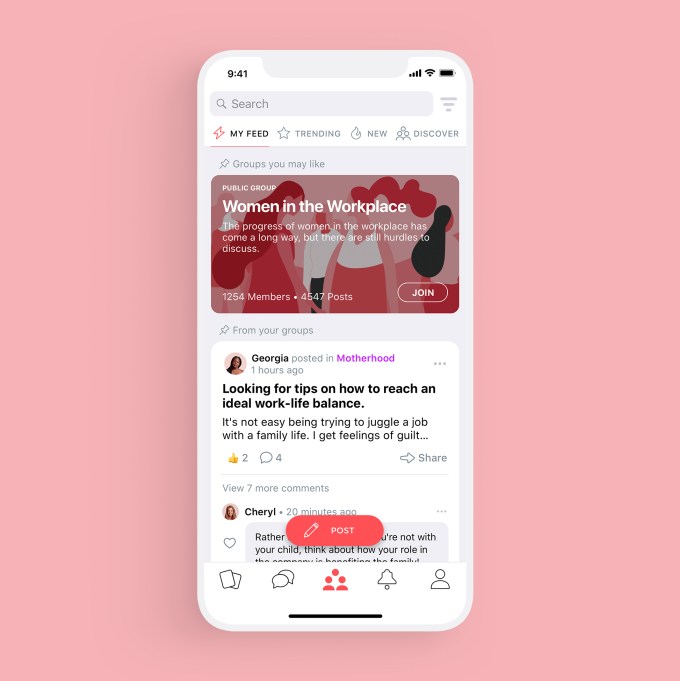
Social network for women Peanut raises $12M Series A amid pandemic

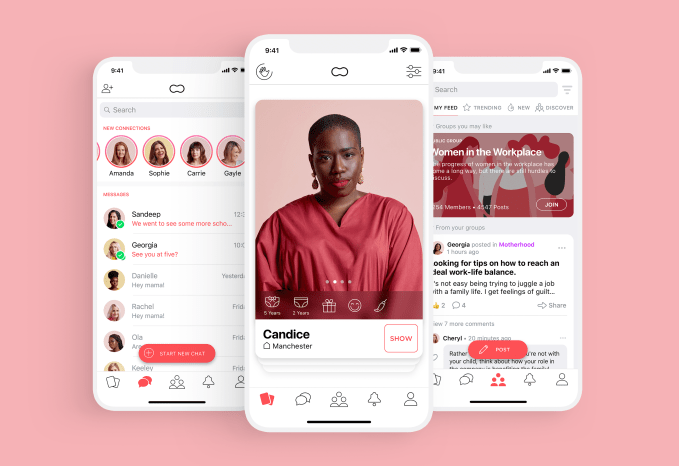
Peanut, an app that began as a tool for finding new mom friends, has evolved into a social network now used by 1.6 million women to discuss a range of topics, from pregnancy and parenthood to marriage and menopause, and everything in between. On the heels of significant growth in online networking fueled by the COVID-19 pandemic, the company is today announcing the close of a $12 million Series A round of funding, led by EQT Ventures, a multi-stage VC firm that invests in companies across Europe and the U.S.

Index Ventures and Female Founders Fund also participated, bringing Peanut’s total raise to date to $21.8 million.

The round itself closed just weeks ago — arriving at a time when the coronavirus pandemic is impacting the startup world, often drying up venture capital for emerging companies. Some startups, as a result, have laid off employees to self-sustain, while others have sought exits or even folded.

Peanut, on the other hand, has seen rapid growth for its platform as women looked for a supportive online environment to discuss their own concerns over how COVID-19 was impacting their lives.

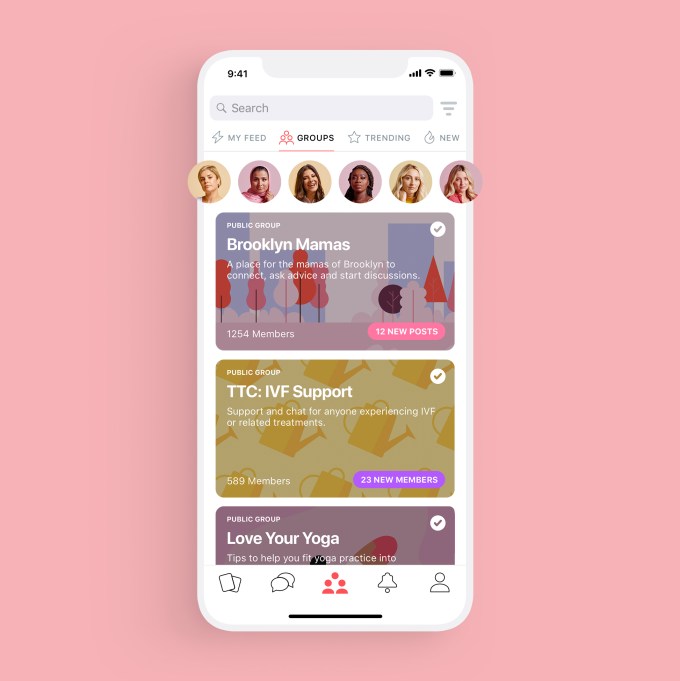
Many women participating in Peanut’s newer “Trying to Conceive” group, for example, worried about their canceled IVF rounds and how to plan for the future. Current moms-to-be wanted to hear from others about how COVID-19 would impact their hospital delivery plans. And others stuck working at home with kids looked for advice and coping strategies.

Since the outbreak, Peanut has seen engagement across its app increase by 30% and content consumption increase by 40%. Its total community also grew from 1 million users in December 2019 to now 1.6 million, as of April.

“We’re really lucky in that we’re growing and that we are, for the most part, untouched by what’s happening,” says Peanut founder and CEO Michelle Kennedy. “And actually, if anyone needed community more, it’s now,” she added.

Though the pandemic has sent the app’s usage skyrocketing, it has also readjusted Peanut’s priorities with regard to its roadmap.

Most notably, its friend-finding feature needs a rethink.

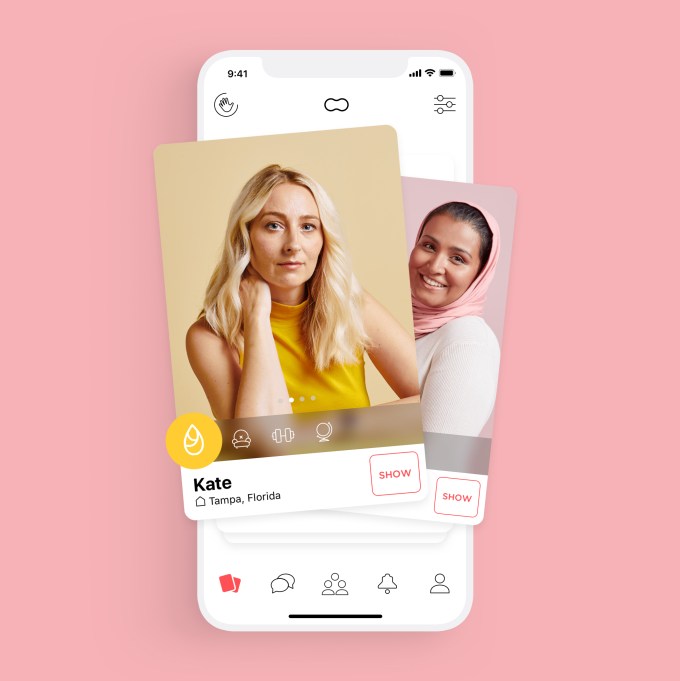
Peanut originally worked as a sort of “Tinder for mom friends” — an idea that arose from Kennedy’s personal experience with how difficult it was to forge female friendships after motherhood. As the former deputy CEO at dating app Badoo and an inaugural board member at Bumble, she brought her extensive experience in matchmaking apps to Peanut, which uses a similar swipe-based mechanism.

But COVID-19 has up-ended this side of Peanut’s business. Today, Peanut users are meeting in Zoom chat rooms to hangout or play games, but not in person.

Kennedy says the company will try to meet these users where they are with the development of more video networking features, potentially with technology built in-house. Other plans for the new capital include improvements to the social discovery aspects of its app, the development of a web version of Peanut, and the creation of more groups beyond those focused on fertility and motherhood, which have so far been core to the Peanut experience.

Specifically, the company soon plans to launch a new community focused on women living with menopause, an experience that will reach more than a billion women by 2025. Despite the fact that all women with ovaries will go through menopause, there are relatively few online communities dedicated to it — which Peanut sees as an untapped market.

Peanut’s real strength, however, is not in the types of communities it grows on its platform, but how they’re created.

There has not yet been a social network that focused on “building a platform for women, thinking about women’s needs and built by a women,” explains Kennedy. “So what we end up doing is using things that already exist — trying to twist them and mold them into what we need, and never getting it exactly right,” she says. “We can do better than that.”

One small example of this is the recent launch of Peanut’s “Mute Keywords” feature that allows women to remove certain types of discussions from their feeds and notifications. Some women used this to create a coronavirus-free news feed that focused on other aspects of motherhood. Others who were trying to conceive muted conversations around “pregnancy,” which they found emotionally triggering.

With the Series A’s close, Peanut says Naza Metghalchi from EQT Ventures joins the company’s majority-female board, alongside Hannah Seal from existing investor Index Ventures.

“Peanut’s user engagement metrics are a testament to the app’s ability to act as a true emotional companion throughout women’s journeys,” said Naza Metghalchi, venture lead and investment advisor at EQT Ventures, in a statement. “The EQT Ventures team is excited to partner with Michelle and continue to grow Peanut into a platform that serves all women at different life milestones, exploring topics beyond fertility and motherhood which have already seen such huge traction.”

The additional funding allows London-based Peanut to expand its business and hire more engineers to join its current team of just 16.

“I think having closed a round in this climate is great for the team,” says Kennedy. “It’s also great for the community because it means that we can grow the team, build quicker, build faster and develop the product more quickly,” she adds.


from Social – TechCrunch https://ift.tt/3b6B3vw
via IFTTT

A security expert says India’s contact tracing app has flaws. New Delhi says they are ‘by design’

The Indian government has said that its contact tracing app Aarogya Setu “by design” fetches the location data of its 90 million users and allows them to view the concentration of people who have tested positive for the coronavirus in their vicinity.

New Delhi issued the statement after France-based security researcher Baptiste Robert found what he argues are design flaws and privacy issues.

The government said it has always disclosed that it fetches users’ location data, a feature that critics say falls short of the privacy protections offered by similar technologies, including the joint project run by Apple and Google.

Aarogya Setu’s privacy policy says the app — in addition to collecting location data of a user at the time of registration — also “continuously collects your location data and stores securely on your mobile device, a record of all the places you have been at 15-minute intervals.” The app uploads this data to its server along with the user’s digital ID if they test positive for COVID-19, or self-declare seeing symptoms that indicate that they might be infected with the infectious disease, it says.

Collecting location data is a complicated subject, regardless of the good intention of its developers and operators. On Monday, Google and Apple banned the use of location tracking on their coronavirus tracing technology.

While some developers have argued that they need access to location data to track how outbreaks move and identify hotspots, privacy advocates have cautioned that if this data ever gets exposed, it could ostracize those who are affected.

Robert’s other concern is that Aarogya Setu, which was launched early last month, allows anyone to view the concentration of people in 500 meters to up to 10 kilometers who are either suspicious they have coronavirus, or are certain that they have the disease. He told TechCrunch that he was able to develop a script and view similar data for any nook and cranny of the world’s second most populous nation.

He said the government, which introduced a nationwide lockdown in late March, could have kept the radius limited to 500 meters.

In response, New Delhi said that its system is designed in a way that would prevent any script from making bulk requests. Additionally, it said, “getting data for multiple latitude and longitude this way is no different from asking several people of their location’s COVID-19 statistics.”

“All this information is already public for all locations and hence does not compromise on any personal or sensitive data,” the response said.

Some people argued today that at a crisis like this, when thousands of people are dying, these “flaws” were the least of their concerns and that the app served a much greater purpose. But Aarogya Setu, which has amassed 90 million monthly active people in less than 35 days, has also ruffled some feathers for the way it is being scaled up. New Delhi said earlier this month that all government and private sector employees need to have this app installed on their smartphones.

On Tuesday, local authority in Noida city, home to more than 640,000 people, on the outskirts of Delhi, said those who did not have Aarogya Setu app installed on their phone would be fined or sent to prison.


from Social – TechCrunch https://ift.tt/3fqRiGQ
via IFTTT