This is default featured slide 1 title

Go to Blogger edit html and find these sentences.Now replace these sentences with your own descriptions.This theme is Bloggerized by Lasantha Bandara - Premiumbloggertemplates.com.

This is default featured slide 2 title

Go to Blogger edit html and find these sentences.Now replace these sentences with your own descriptions.This theme is Bloggerized by Lasantha Bandara - Premiumbloggertemplates.com.

This is default featured slide 3 title

Go to Blogger edit html and find these sentences.Now replace these sentences with your own descriptions.This theme is Bloggerized by Lasantha Bandara - Premiumbloggertemplates.com.

This is default featured slide 4 title

Go to Blogger edit html and find these sentences.Now replace these sentences with your own descriptions.This theme is Bloggerized by Lasantha Bandara - Premiumbloggertemplates.com.

This is default featured slide 5 title

Go to Blogger edit html and find these sentences.Now replace these sentences with your own descriptions.This theme is Bloggerized by Lasantha Bandara - Premiumbloggertemplates.com.

WhatsApp is doing fine despite months-long backlash over policy update

It’s safe to say WhatsApp didn’t have the ideal start to 2021. Less than a week into the new year, the Facebook-owned instant messaging app had already annoyed hundreds of thousands of users with its scary-worded notification about a planned policy update. The backlash grew fast and millions of people, including several high-profile figures, started to explore rival apps Signal and Telegram.

Even governments, including India’s — WhatsApp’s biggest market by users — expressed concerns. (In case of India, also an antitrust probe.) The backlash prompted WhatsApp to offer a series of clarifications and assurances to users, and it also postponed the deadline for enforcing the planned update by three months. Now with the May 15 deadline just a week away, we are able to quantify the real-world impact the aforementioned backlash had on WhatsApp’s user base: Nada.

The vast majority of users that WhatsApp has notified about the planned update in recent months have accepted the update, a WhatsApp spokesperson told TechCrunch. And the app continues to grow, added the spokesperson without sharing the exact figures. The company also didn’t share how many users it has notified about the planned update.

Facebook’s recent earnings call gives us some idea: The company’s family of apps had 3.45 billion monthly active users as of March 31, 2021, up from 3.3 billion on December 31, and 3.21 billion on September 30.

Users who don’t agree to the new terms, as TechCrunch has previously reported, won’t lose access to their accounts or any feature on May 15, WhatsApp said. But after an unspecified number of weeks, such users will lose several core functionalities — though not at the same time.

“We’ll continue to provide reminders to those users within WhatsApp in the weeks to come,” the spokesperson added.

Since 2016, WhatsApp’s privacy policies have granted the service permission to share with Facebook certain metadata such as user phone numbers and device information.

The new terms allow Facebook and WhatsApp to share payment and transaction data in order to help them better target ads as the social juggernaut broadens its e-commerce offerings and looks to merge its messaging platforms.


from Social – TechCrunch https://ift.tt/3tqUurR
via IFTTT

Twitter Tip Jar lets you pay people for good tweetin’

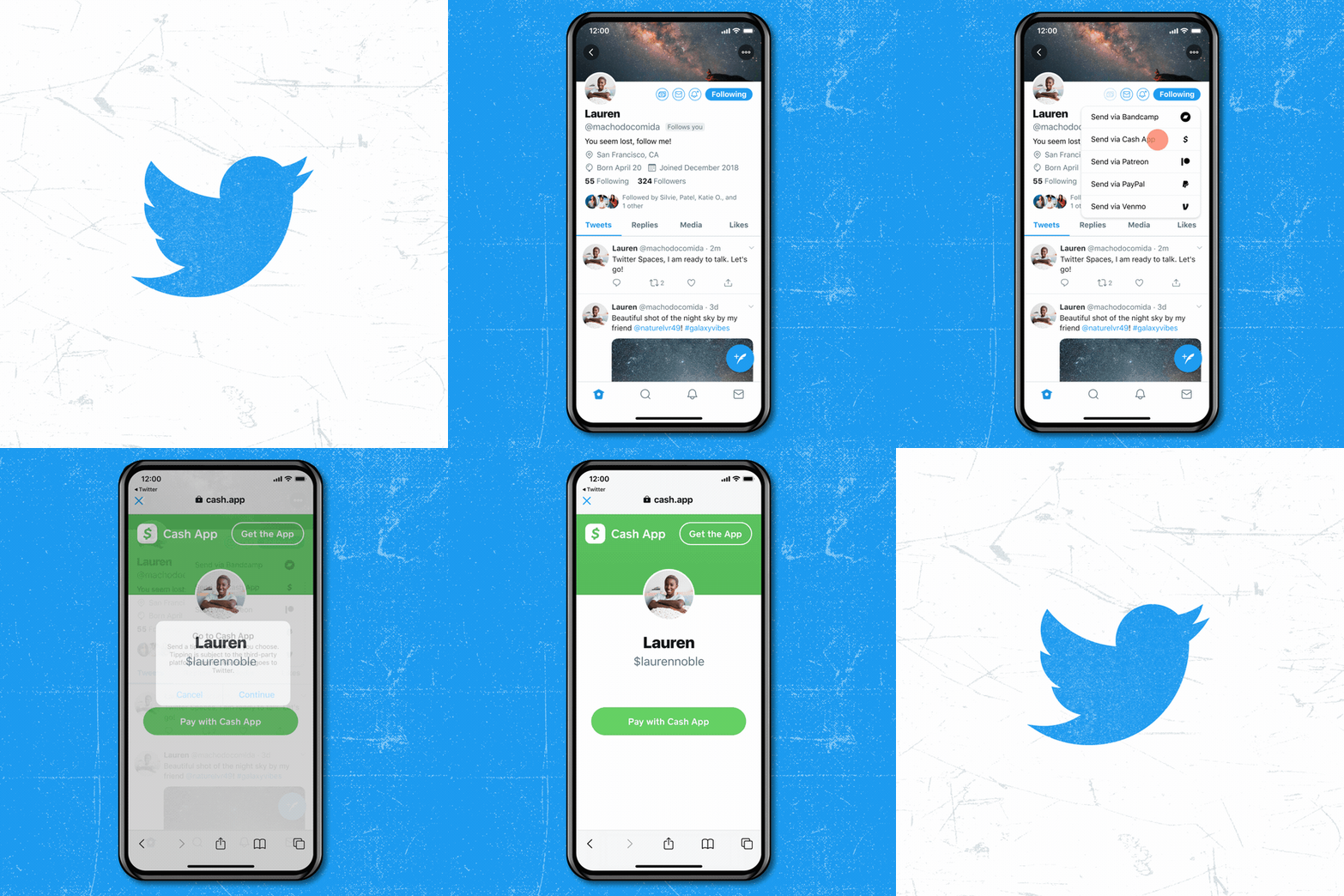
Twitter today confirmed earlier reports that it’s testing a new Tip Jar feature. The new addition utilizes a number of different payment platforms, including PayPal, Venmo, Patreon, Cash App and Bandcamp (all region-dependent).

“Tip Jar is an easy way to support the incredible voices that make up the conversation on Twitter,” the company wrote in a blog post confirming the news. “This is a first step in our work to create new ways for people to receive and show support on Twitter — with money.”

Image Credits: Twitter

Currently available on both iOS and Android, the feature is designed to give users a way to quickly tip creators with a few taps. Tip Jar is beginning to roll out to select groups of users, including nonprofits, journalists, experts and creators. The company has further plans to roll it out to additional groups and languages.

For now, those using Twitter in English will be able to send a tip. Those profiles that have enabled it will show the Tip Jar icon on their profile page to the left of the Follow button. Hitting that will show a list of the aforementioned third-party money transfer apps. The opt-in feature will pop up in the mobile app, letting qualified users choose which payment platforms they’ll accept.

In addition to the above, Android users will be able to send money via Twitter’s Clubhouse competitor, Spaces. The company says it won’t be taking a percentage of those transactions.

The feature comes as the service looks to become a more well-rounded content-creation platform. In addition to the audio feature, Spaces (which recently saw a much wider roll out), Twitter has also been looking to take on the likes of Substack with its own newsletter-style offering.


from Social – TechCrunch https://ift.tt/3nSmuUa
via IFTTT

BigBrain aims to bring live mobile trivia back to glory

If you ask Nik Bonaddio why he wanted to build a new mobile trivia app, his answer is simple.

“In my life, I’ve got very few true passions: I love trivia and I love sports,” Bonaddio told me. “I’ve already started a sports company, so I’ve got to start a trivia company.”

He isn’t kidding about either part of the equation. Bonaddio actually won $100,000 on “Who Wants To Be A Millionaire?”, which he used to start the sports analytics company numberFire (acquired by FanDuel in 2014).

And today, after a period of beta testing, Bonaddio is launching BigBrain. He’s also announcing that the startup has raised $4.5 million in seed funding from FirstRound Capital, Box Group, Ludlow Ventures, Golden Ventures and others.

Of course, you can’t mention mobile trivia without thinking of HQ Trivia, the trivia app that shut down last year after some high-profile drama and a spectacular final episode.

BigBrain

Image Credits: BigBrain

But Bonaddio said BigBrain is approaching things differently than HQ in a few key ways. For starters, although there will be a handful of free games, the majority will require users to pay to enter, with the cash rewards coming from the entry fees. (From a legal perspective, Bonaddio said this is distinct from gambling because trivia is recognized as a game of skill.)

“The free-to-play model doesn’t really work for trivia,” he argued.

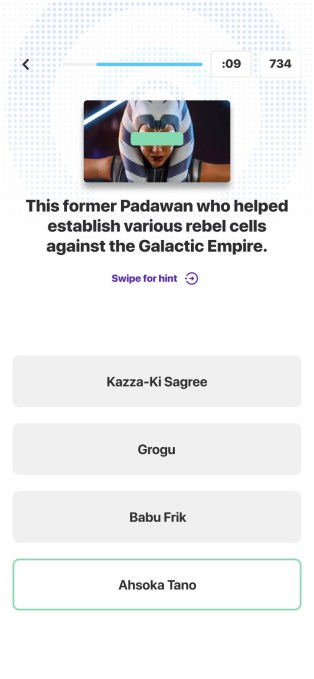
In addition, there will be no live video with a live host — Bonaddio said this would “very, very difficult from a technical perspective and very cost ineffective.” Instead, he claimed the company has found a middle ground: “We have photos, we have different interactive elements, it’s not just a straight multiple choice quiz. We do try to keep it interactive.”

Plus, the simpler production means that where HQ was only hosting two quizzes a day, BigBrain will be hosting 20, with quizzes every 15 minutes at peak times.

Topics will range from old school hip hop to college football to ’90s movies, and Bonaddio said different quizzes will have different prize structures — some might be winner take all, while others might award prizes to the top 50% of participants. The average quiz will cost $2 to $3 to enter, but prices will range from free to “$20 or even $50.”

What kind of quiz might cost that much money to enter? As an example, Bonaddio said that in a survey of potential users, he found, “There are no casual ‘Rick and Morty’ fans … They’re almost completely price sensitive, and since they’ve seen every episode, they can’t fathom a world where someone knows more about ‘Rick and Morty’ than they do.”


from Social – TechCrunch https://ift.tt/3f4sVQe
via IFTTT

Snap to launch a new Creator Marketplace this month, initially focused on Lens Creators

Snap on Wednesday announced its plan to soon launch a Creator Marketplace, which will make it easier for businesses to find and partner with Snapchat creators, including lens creators, AR creators and later, prominent Snapchat creators known as Snap Stars. At launch, the marketplace will focus on connecting brands and AR creators for AR ads. It will then expand to support all Snap Creators by 2022.

The company had previously helped connect its creator community with advertisers through its Snapchat Storytellers program, which first launched into pilot testing in 2018 — already a late arrival to the space. However, that program’s focus was similar to Facebook’s Brand Collabs Manager, as it focused on helping businesses find Snap creators who could produce video content.

Snap’s new marketplace, meanwhile, has a broader focus in terms of connecting all sorts of creators with the Snap advertising ecosystem. This includes Lens Creators, Developers and Partners, and then later, Snap’s popular creators with public profiles.

Snap says the Creator Marketplace will open to businesses later this month to help them partner with a select group of AR Creators in Snap’s Lens Network. These creators can help businesses build AR experiences without the need for extensive creative resources, which makes access to Snap’s AR ads more accessible to businesses, including smaller businesses without in-house developer talent.

Lens creators have already found opportunity working for businesses that want to grow their Snapchat presence — even allowing some creators to quit their day jobs and just build lens for a living. Snap has been further investing in this area of its business, having announced in December a $3.5 million fund directed towards AR Lens creation. The company said at the time there were tens of thousands of Lens creators who had collectively made over 1.5 million Lenses to date.

Using Lenses has grown more popular, too, the company had noted, saying that over 180 million people interact with a Snapchat Lens every day — up from 70 million daily active users of Lenses when the Lens Explorer section first launched in the app in 2018.

Now, Snap says that over 200 million Snapchat users interact with augmented reality on a daily basis, on average, out of its 280 million daily users. The majority (over 90%) of these users are 13-25 year olds. In total, users are posting over 5 billion Snaps per day.

Snap says the Creator Marketplace will remain focused on connecting businesses with AR Lens Creators throughout 2021.

The following year, it will expand to include the community of professional creators and storytellers who understand the current trends and interests of the Snap user base and can help businesses with their ad campaigns. The company will not take a cut of the deals facilitated through the Marketplace, it says.

This would include the creators making content for Snap’s new TikTok rival, Spotlight, which launched in November 2020. Snap encouraged adoption of the feature by shelling out $1 million per day to creators of top videos. In March 2021, over 125 million Snapchat users watched Spotlight, it says.

Image Credits: Snapchat

Spotlight isn’t the only way Snap is challenging TikTok.

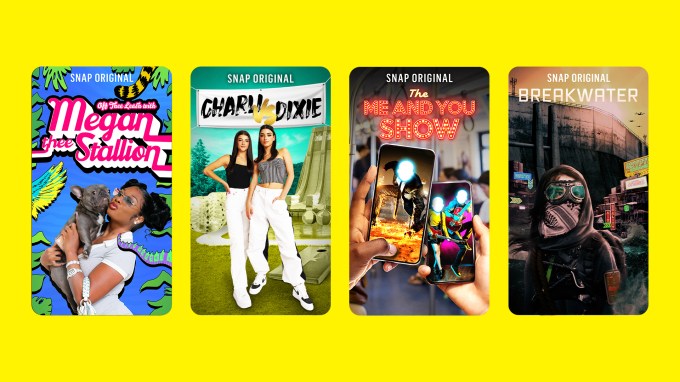
The company also on Wednesday announced it’s snagging two of TikTok’s biggest stars for its upcoming Snap Originals lineup: Charli and Dixie D’Amelio. The siblings, who have gained over 20 million follows on Snapchat this past year, will star in the series “Charli vs. Dixie.” Other new Originals will feature names like artist Megan Thee Stallion, actor Ryan Reynolds, twins and influencers Niki and Gabi DeMartino, and YouTube beauty vlogger Manny Mua, among others.

Snap’s shows were watched by over 400 million people in 2020, including 93% of the Gen Z population in the U.S., it noted.


from Social – TechCrunch https://ift.tt/3tq5QME
via IFTTT

Twitter rolls out bigger images and cropping control on iOS and Android

Twitter just made a change to the way it displays images that has visual artists on the social network celebrating.

In March, Twitter rolled out a limited test of uncropped, larger images in users’ feeds. Now, it’s declared those tests a success and improved the image sharing experience for everybody.

On Twitter for Android or iOS, standard aspect ratio images (16:9 and 4:3) will now display in full without any cropping. Instead of gambling on how an image will show up in the timeline — and potentially ruining an otherwise great joke — images will look just like they did when you shot them.

Twitter’s new system will show anyone sharing an image a preview of what it will look like before it goes live in the timeline, resolving past concerns that Twitter’s algorithmic cropping was biased toward highlighting white faces.

“Today’s launch is a direct result of the feedback people shared with us last year that the way our algorithm cropped images wasn’t equitable,” Twitter spokesperson Lauren Alexander said. The new way of presenting images decreases the platform’s reliance on automatic, machine learning-based image cropping.

Super tall or wide images will still get a centered crop, but Twitter says it’s working to make that better too, along with other aspects of how visual media gets displayed in the timeline.

For visual artists like photographers and cartoonists who promote their work on Twitter, this is actually a pretty big deal. Not only will photos and other kinds of art score more real estate on the timeline, but artists can be sure that they’re putting their best tweet forward without awkward crops messing stuff up.

Twitter’s Chief Design Officer Dantley Davis celebrated by tweeting a requisite dramatic image of the Utah desert (Dead Horse Point — great spot!)

We regret to inform you that the brands are also aware of the changes.

The days of “open for a surprise” tweets might be numbered, but the long duck can finally have his day.


from Social – TechCrunch https://ift.tt/3eVHmWG
via IFTTT

Facebook’s Oversight Board throws the company a Trump-shaped curveball

Facebook’s controversial policy-setting supergroup issued its verdict on Trump’s fate Wednesday, and it wasn’t quite what most of us were expecting.

We’ll dig into the decision to tease out what it really means, not just for Trump, but also for Facebook’s broader experiment in outsourcing difficult content moderation decisions and for just how independent the board really is.

What did the Facebook Oversight Board decide?

The Oversight Board backed Facebook’s determination that Trump violated its policies on “Dangerous Individuals and Organizations,” which prohibits anything that praises or otherwise supports violence. The the full decision and accompanying policy recommendations are online for anyone to read.

Specifically, the Oversight Board ruled that two Trump posts, one telling Capitol rioters “We love you. You’re very special” and another calling them “great patriots” and telling them to “remember this day forever” broke Facebook’s rules. In fact, the board went as far as saying the pair of posts “severely” violated the rules in question, making it clear that the risk of real-world harm in Trump’s words was was crystal clear:

The Board found that, in maintaining an unfounded narrative of electoral fraud and persistent calls to action, Mr. Trump created an environment where a serious risk of violence was possible. At the time of Mr. Trump’s posts, there was a clear, immediate risk of harm and his words of support for those involved in the riots legitimized their violent actions. As president, Mr. Trump had a high level of influence. The reach of his posts was large, with 35 million followers on Facebook and 24 million on Instagram.”

While the Oversight Board praised Facebook’s decision to suspend Trump, it disagreed with the way the platform implemented the suspension. The group argued that Facebook’s decision to issue an “indefinite” suspension was an arbitrary punishment that wasn’t really supported by the company’s stated policies:

It is not permissible for Facebook to keep a user off the platform for an undefined period, with no criteria for when or whether the account will be restored.

In applying this penalty, Facebook did not follow a clear, published procedure. ‘Indefinite’ suspensions are not described in the company’s content policies. Facebook’s normal penalties include removing the violating content, imposing a time-bound period of suspension, or permanently disabling the page and account.”

The Oversight Board didn’t mince words on this point, going on to say that by putting a “vague, standardless” punishment in place and then kicking the ultimate decision to the Oversight Board, “Facebook seeks to avoid its responsibilities.” Turning things around, the board asserted that it’s actually Facebook’s responsibility to come up with an appropriate penalty for Trump that fits its set of content moderation rules.


Is this a surprise outcome?

If you’d asked me yesterday, I would have said that the Oversight Board was more likely to overturn Facebook’s Trump decision. I also called Wednesday’s big decision a win-win for Facebook, because whatever the outcome, it wouldn’t ultimately be criticized a second time for either letting Trump back onto the platform or kicking him off for good. So much for that!

A lot of us didn’t see the “straight up toss the ball back into Facebook’s court” option as a possible outcome. It’s ironic and surprising that the Oversight Board’s decision to give Facebook the final say actually makes the board look more independent, not less.

Facebook likely saw a more clear-cut decision on the Trump situation in the cards. This is a challenging outcome for a company that’s probably ready to move on from its (many, many) missteps during the Trump era. But there’s definitely an argument that if the board declared that Facebook made the wrong call and reinstated Trump that would have been a much bigger headache.

What does it mean that the Oversight Board sent the decision back to Facebook?

Ultimately the Oversight Board is asking Facebook to either a) give Trump’s suspension and end date or b) delete his account. In a less severe case, the normal course of action would be for Facebook to remove whatever broke the rules, but given the ramifications here and the fact that Trump is a repeat Facebook rule-breaker, this is obviously all well past that option.

What will Facebook do?

We’re in for a wait. The board called for Facebook to evaluate the Trump situation and reach a final decision within six months, calling for a “proportionate” response that is justified by its platform rules. Since Facebook and other social media companies are re-writing their rules all the time and making big calls on the fly, that gives the company a bit of time to build out policies that align with the actions it plans to take. See you again on November 5.

In the months following the violence at the U.S. Capitol, Facebook repeatedly defended its Trump call as “necessary and right.” It’s hard to imagine the company deciding that Trump will get reinstated six months from now, but in theory Facebook could decide that length of time was an appropriate punishment and write that into its rules. The fact that Twitter permanently banned Trump means that Facebook could comfortably follow suit at this point.

If Trump had won reelection, this whole thing probably would have gone down very differently. As much as Facebook likes to say its decisions are aligned with lofty ideals — absolute free speech, connecting people — the company is ultimately very attuned to its regulatory and political environment. Trump’s actions were on January 6 were dangerous and flagrant, but Biden’s looming inauguration two weeks later probably influenced the company’s decision just as much.

In direct response to the decision, Facebook’s Nick Clegg wrote only: “We will now consider the board’s decision and determine an action that is clear and proportionate.” Clegg says Trump will stay suspended until then but didn’t offer further hints at what comes next.

Did the board actually change anything?

Potentially. In its decision, the Oversight Board said that Facebook asked for “observations or recommendations from the Board about suspensions when the user is a political leader.” The board’s policy recommendations aren’t binding like its decisions are, but since Facebook asked, it’s likely to listen.

If it does, the Oversight Board’s recommendations could reshape how Facebook handles high profile accounts in the future:

The Board stated that it is not always useful to draw a firm distinction between political leaders and other influential users, recognizing that other users with large audiences can also contribute to serious risks of harm.

While the same rules should apply to all users, context matters when assessing the probability and imminence of harm. When posts by influential users pose a high probability of imminent harm, Facebook should act quickly to enforce its rules. Although Facebook explained that it did not apply its ‘newsworthiness’ allowance in this case, the Board called on Facebook to address widespread confusion about how decisions relating to influential users are made. The Board stressed that considerations of newsworthiness should not take priority when urgent action is needed to prevent significant harm.

Facebook and other social networks have hidden behind newsworthiness exemptions for years instead of making difficult policy calls that would upset half their users. Here, the board not only says that political leaders don’t really deserve special consideration while enforcing the rules, but that it’s much more important to take down content that could cause harm than it is to keep it online because it’s newsworthy.

So… we’re back to square one?

Yes and no. Trump’s suspension may still be up in the air, but the Oversight Board is modeled after a legal body and its real power is in setting precedents. The board kicked this case back to Facebook because the company picked a punishment for Trump that wasn’t even on the menu, not because it thought anything about his behavior fell in a gray area.

The Oversight Board clearly believed that Trump’s words of praise for rioters at the Capitol created a high stakes, dangerous threat on the platform. It’s easy to imagine the board reaching the same conclusion on Trump’s infamous “when the looting starts, the shooting starts” statement during the George Floyd protests, even though Facebook did nothing at the time. Still, the board stops short of saying that behavior like Trump’s merits a perma-ban — that much is up to Facebook.


from Social – TechCrunch https://ift.tt/2RtBls2
via IFTTT

Facebook launches Neighborhoods, a Nextdoor clone

Facebook is launching a new section of its app designed to connect neighbors and curate neighborhood-level news. The new feature, predictably called Neighborhoods, is available now in Canada and will be rolling out soon for U.S. users to test.

As we reported previously, Neighborhoods has technically been around since at least October of last year, but that limited test only recruited residents of Calgary, Canada.

On Neighborhoods, Facebook users can create a separate sub-profile and can populate it with interests and a custom bio. You can join your own lower-case neighborhood and nearby neighborhoods and complain about porch pirates, kids these days, or whatever you’d otherwise be doing on Nextdoor.

Aware of the intense moderation headaches on Nextdoor, Facebook says that it will have a set of moderators dedicated to Neighborhoods to will review comments and posts to keep matters “relevant and kind.” Within Neighborhoods neighborhoods, deputized users can steer and strike up conversations and do some light moderation, it sounds like. The new corner of Facebook will also come with blocking features.

As far as privacy goes, well, it’s Facebook. Neighborhoods isn’t its own standalone app and will naturally be sharing your neighborly behavior to serve you targeted ads elsewhere.


from Social – TechCrunch https://ift.tt/2R00v1v
via IFTTT