This is default featured slide 1 title

Go to Blogger edit html and find these sentences.Now replace these sentences with your own descriptions.This theme is Bloggerized by Lasantha Bandara - Premiumbloggertemplates.com.

This is default featured slide 2 title

Go to Blogger edit html and find these sentences.Now replace these sentences with your own descriptions.This theme is Bloggerized by Lasantha Bandara - Premiumbloggertemplates.com.

This is default featured slide 3 title

Go to Blogger edit html and find these sentences.Now replace these sentences with your own descriptions.This theme is Bloggerized by Lasantha Bandara - Premiumbloggertemplates.com.

This is default featured slide 4 title

Go to Blogger edit html and find these sentences.Now replace these sentences with your own descriptions.This theme is Bloggerized by Lasantha Bandara - Premiumbloggertemplates.com.

This is default featured slide 5 title

Go to Blogger edit html and find these sentences.Now replace these sentences with your own descriptions.This theme is Bloggerized by Lasantha Bandara - Premiumbloggertemplates.com.

Tinder tested group video chat ahead of Match’s move into social discovery with Hyperconnect deal

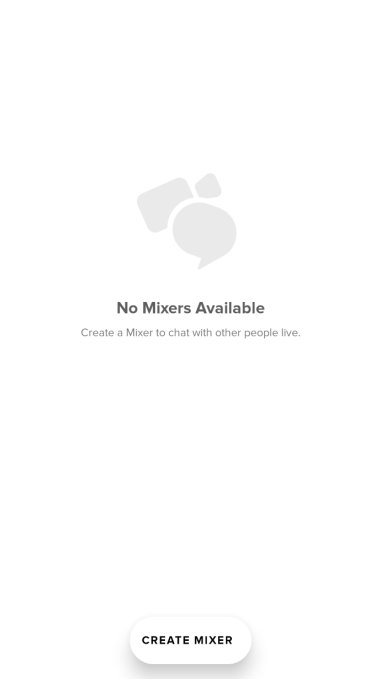
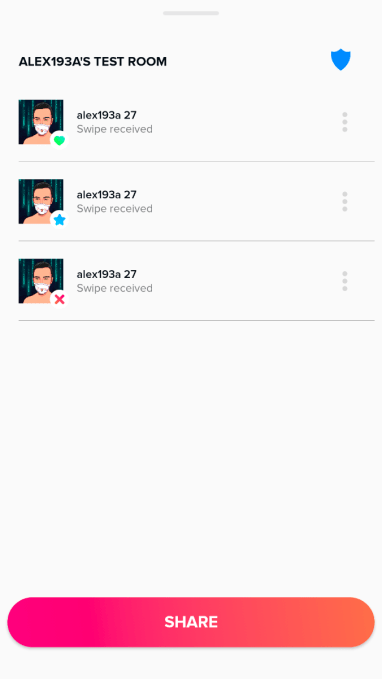
As dating app Tinder and its parent company Match explore the future of personal connection through apps, it’s interesting to see what sort of ideas it tested but later discarded. One such experiment was something called “Tinder Mixer,” which had briefly offered Tinder users a way to join group video chats, and “play games” with others nearby.

The feature was tested for a short period of time last year in New Zealand, we understand, but will not be launching.

The Tinder Mixer experience was uncovered by app researcher Alessandro Paluzzi, who found references the product in the Tinder Android app’s code. He had not yet publicized the finding, as we worked to learn more about the origins of the product.
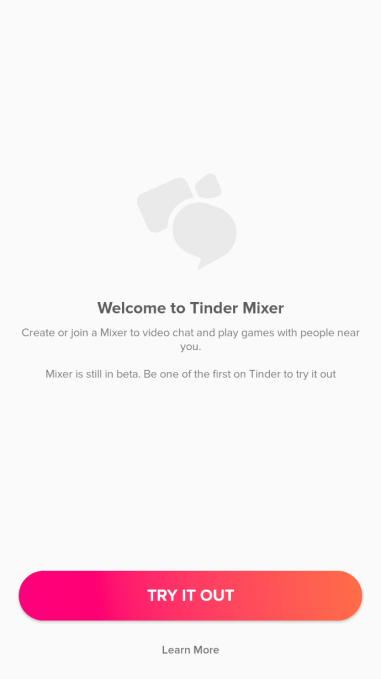
The resources he found in the dating app had given the appearance of a product in the midst of development, Paluzzi noted, but as it turns out it was one that had already been tested and quickly shut down as Tinder continued its other, ongoing experiments in the dating market.

According to Tinder, the Tinder Mixer test has no impact on its product roadmap this year, and the Tinder Mixer experience described here will likely never come into existence.

That said, what made the product particularly intriguing was that it saw Tinder venturing, however briefly and experimentally, into more of a social discovery space, compared with the usual Tinder experience. Typically, Tinder users swipe on daters’ profiles, match, chat and sometimes even video call each other on a one-on-one basis. But live video chatting with a group is not something Tinder today offers.
That said, the idea of going live on video is not new to Match.

This is an area where the company has experimented before, including with its apps Plenty of Fish, which offers a one-to-many video broadcasting feature, and Ablo, which offers one-on-one video chats with people around the world. These experiments constitute what the company considers “dating-adjacent” experiences. In other words, you could meet someone through these video interactions, but that’s not necessarily their main goal.
These video experiences have continued even as Match announced its $1.73 billion acquisition of Seoul-based Hyperconnect — its biggest acquisition ever, and one that puts the company more on the path towards a future that involves the “social discovery” and live streaming market.

The company believes social discovery an area with vast potential, and a market it estimates that could be twice the size of dating, in fact.

Match Group CEO Shar Dubey spoke to this point recently at the JP Morgan Technology, Media and Communications Conference, noting that on some of its bigger platforms, Match has seen that a number of its users were looking for more of “a shared experience and a sense of community among other like-minded single people on the platform,” she said.

She noted that technology has reached a point where people could now interact with others through richer experiences than the traditional dating flow of swipe-match-chat allowed for, including few-to-few, many-to-many, and one-to-many type of experiences.

Hyperconnect brings to Match much of the technology that would allow the company to expand in these areas.

Today, it offers two apps, Azar and Hakuna Live, which let users to connect with one another online. The former, launched in 2014, is focused on one-on-one live video and voice chats while the latter, launched in 2019 is in the online broadcast space. Not coincidentally, these apps mirror the live stream experiences that Match has been running on Plenty of Fish and Ablo.

Because these live streaming services are often more heavily adopted by younger demographics, it makes sense that Match may have wanted to also test out such a live stream experience on Tinder, which also skews younger, even if the test ultimately only served as a way to collect data as opposed to informing a specific future product’s development.

With the Hyperconnect deal soon to be finalized, the incoming apps will initially give Match an expanded footprint in the live streaming and social discovery market in Asia — 75% of Hyperconnect’s usage and revenue comes from markets in Asia. Match then plans to leverage its international experience and knowledge to accelerate their growth in other markets where they haven’t yet broken through.

But another major reason for the acquisition is that Match sees the potential in deploying Hyperconnect’s technology across its existing portfolio of dating apps to not only create richer experiences but also to cater to users in markets where the “Western” way of online dating hasn’t yet been fully embraced, but social discovery has.

“We think there is real synergy of bringing some of these experiences that are popular in social discovery platforms onto our dating platforms, as well as sort of enhance the social discovery platforms and help people get to their dating intent, should they choose to,” Dubey explained, at the JP Morgan conference.

What any of that may mean for Tinder, more specifically, is not yet known.


from Social – TechCrunch https://ift.tt/3fIwcGk
via IFTTT

Twitter starts rolling out Birdwatch fact checks inside tweets

Twitter is looking to crowdsource its way out of misinformation woes with its new product Birdwatch which taps a network of engaged tweeters to add notes to misleading tweets. Today, Twitter announced that they are starting to roll out the Birdwatch notes to pilot participants across iOS, Android and desktop.

The company launched a pilot version of the program back in January, describing the effort as a way to add context to misinformation in real time.

“We believe this approach has the potential to respond quickly when misleading information spreads, adding context that people trust and find valuable” Product VP Keith Coleman wrote in a blog post at the time. “Eventually we aim to make notes visible directly on Tweets for the global Twitter audience, when there is consensus from a broad and diverse set of contributors.”

That time is apparently now for an early set of Birdwatch pilot participants.

Twitter says that once Birdwatch notes are added to a tweet, users will have the opportunity to rate whether the feedback is helpful or not. If none of the replies are deemed helpful, the Birdwatch card itself will disappear, but if any notes are deemed helpful they’ll pop up directly inside the tweet.

There have been an awful lot of questions about how and whether Birdwatch will work inside the current social media framework. Using community feedback differs from more centralized efforts used by platforms like Facebook that have tapped independent fact-checking organizations. Twitter is clearly aiming to decentralize this effort as much as it can and put power in the hands of Birdwatch contributors, but with audiences of individual tweeters currently responsible for deeming the helpfulness and visibility of fact checks, it’s clear this is going to be a pretty messy solution at times.


from Social – TechCrunch https://ift.tt/3fJP7Rd
via IFTTT

Facebook’s Spark AR platform expands to video calling with Multipeer API

At today’s F8 developer conference, Facebook announced new capabilities for Spark AR, its flagship AR creation software. Since Spark AR was announced at F8 2017, more than 600,000 creators from 190 countries have published over 2 million AR effects on Facebook and Instagram, making it the largest mobile AR platform, according to Facebook. If you’ve ever posted a selfie on your Instagram story with an effect that gave you green hair, or let you control a dog’s facial expression by moving your own face, then you’ve used Spark AR

Soon, these AR effects will be available for video calling on Messenger, Instagram, and Portal with the introduction of a Multipeer API. Creators can develop effects that bring call participants together by using a shared AR effect. As an example, Spark AR shared a promo video of a birthday party held over a video call, in which an AR party hat appears on each of the participants’ heads. 

Creators can also develop games for users to play during their video calls. This already exists on Facebook video calls – think of the game where you compete to see who can catch the most flying AR hamburgers in their mouth in a minute. But when the ability to make new, lightweight games opens to developers, we’ll see some new games to challenge our friends with on video calls. 

These video call effects and multipeer AR games will be bolstered by Spark’s platform exclusive multi-class segmentation capability. This lets developers augment multiple segments of a user’s body (like hair or skin) at once within a single effect. 

Facebook also discussed its ongoing ambition to build AR glasses. Chris Barber, Director of Partnerships for Spark AR, said that this goal is still “years away” – but, Barber did tease some potential features for the innovative, wearable tech. 

“Imagine being able to teleport to a friend’s sofa to watch a show together, or being able to share a photo of something awesome you see on a hike,” Barber said. Maybe this won’t sound so dystopian by the time the product launches, years down the road. 

Last October, Spark AR launched the AR Partner Network, a program for the platform’s most advanced creators, and this year, Spark launched an AR curriculum through Facebook’s BluePrint Platform to help creators learn how to improve their AR effects. Applications for the Spark Partner Network will open again this summer. For now, creators and developers can apply to start building effects for video calling through the Spark AR Video Calling Beta


from Social – TechCrunch https://ift.tt/2S88Uk1
via IFTTT

Facebook to launch a ‘Researcher API’ for the academic community

Facebook said it’s preparing to launch a new application programming interface (API) designed specifically for access by the research community. The API was announced during Facebook’s F8 developer conference today, and is meant to address issues that arose from changes made to Facebook’s platform in 2018 following the Cambridge Analytica data scandal. That event forced the company to re-evaluate the access developers had to its user data.

Over the past three years, Facebook says it has deprecated thousands of APIs to reduce the risk of future data misuse and breaches.

It also renewed its agreements with developers on the platform to ensure they were “committed to the same values as we are,” noted Facebook VP of platform partnerships, Konstantinos Papamiltiadis, during the keynote address.

However, Facebook admitted these changes had an impact on the academic research community, which had before been able to more broadly access Facebook data.

To address this, the company announced it’s soon launching a Researcher API, which will allow researchers to again analyze Facebook data with the goal of understanding the social network’s “influence on society,” Papamiltiadis noted.

“We wanted to make sure we got this right, and we were intentional about developing the best products to support researchers, while keeping people’s data safe and secure,” he said.

The Researcher API will offer real-time access to public Pages, Groups, Events and post-level U.S. data in a privacy-protected environment, the exec said. But further details were not offered, including, for example, how researchers would be vetted or whether there would be any fees associated with the data access.

The API will become available to the academic community later this year, Facebook said.


from Social – TechCrunch https://ift.tt/3wOPNdC
via IFTTT

Facebook opens its Messenger API for Instagram to all

F8 Refresh, Facebook’s annual developer conference with a new twist — it’s more pared down than in years past, and virtual — is going to be kicking off later today, and ahead of that Facebook is unveiling some news: all businesses can now use the Messenger API to interact with users on Instagram. The feature is opening first to all developers globally, with a phased approach for businesses:

Phase 1 will see Instagram accounts with follower counts of over 10,000 and under 100,000 connect to the API. It plans to expand that to accounts with followers numbering between 1,000 and 100,000 in July (phase 2), with remaining accounts coming online by Q3.

The feature was first announced as a closed beta in October with select businesses — 30 developers and 700 brands in all. Now, any brand or organization using Instagram to interact with customers can use it.

The key point with this tool is that this integration represents a significant step forward in how companies can leverage the wider Facebook platform.

In the past, a brand that wanted to interact with customers either needed to do so directly through Instagram, or via Facebook’s unified business inbox, which are limited how they can be used, especially by companies that might be handling large volumes of traffic, or keen to be able to link up those customer interactions with wider customer service databases.

The Messenger API, by contrast, can be integrated into any third-party application that a company or brand might be using to manage communication, whether it’s a social media management platform like Hootsuite or Sprinklr, or a CRM application that can bring in other kinds of customer data, for example warranty information or loyalty card numbers.

Facebook noted that one of the key takeaways from the closed beta was that brands and companies wanted better ways of managing communications from one place; and another was that many of them are making more investments in software to better manage their communications and workflows. So extending the Messenger API to Instagram was a feature that was long needed in that regard.

The move to expand the Messenger API to Instagram makes sense in a couple of different ways. For starters, Facebook has been turning up the volume for some time on how it leverages Instagram’s commercial potential, starting with advertising but expanding into areas like conversation between brands or businesses and users, and most recently, enhanced shopping features. Facebook also notes that 90% of Instagram users today follow at least one business, so creating a better route for managing those conversations is a logical move.

At the same time, Facebook has been working on ways of better linking up its various apps and platforms — which include Facebook itself, Messenger, WhatsApp, Instagram and Oculus, not just for users to interact across them but to help businesses leverage them in a more unified social strategy. Rolling out the Messenger API — created originally to help brands interact with bots and manage conversations on Messenger — to include support for Instagram fits into both of those bigger strategies.

And for those wondering why it’s being announced ahead of F8 Refresh? Perhaps it’s a hint of what is the social network’s bigger priorities for this year’s event: partnerships to enable more business to take place on the social networking giant’s platforms.


from Social – TechCrunch https://ift.tt/3uKOivm
via IFTTT

Twitter’s acquisition strategy: eat the public conversation

The last few months have been interesting for Twitter.

After years of no innovation at all, Twitter is making big product changes. It has acquired Breaker and Revue, and presumably has more M&A coming. It’s coming out with Spaces. The only thing it clearly isn’t working on is an edit button.

The core idea is that Twitter is doubling down on multichannel engagement for creators so that they never have to leave for anywhere else.

Strategically, though, what is a microblogging service doing buying a social podcasting company and a newsletter tool while also building a live broadcasting sub-app? Is there even a strategy at all?

I humbly propose this: There is a strategy. Twitter is trying to revitalize itself by adding more contexts for discourse to its repertoire. The result, if everything goes right, will be an influence superapp that hasn’t existed anywhere before. The alternative is nothing less than the destruction of Twitter into a link-forwarding service.

Let’s talk about how Twitter is trying to eat the public conversation.

Why now?

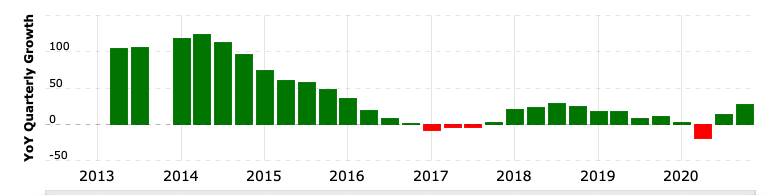
Twitter’s problem is pretty simple. It’s this.

Twitter revenue quarterly growth 2013-21

Twitter revenue quarterly growth 2013-21. Image Credits: Macrotrends

Another way of putting it is: Twitter is not generating as much money from ads as it used to. Ad revenue has failed to grow because Twitter is generally considered to have a poorly performing product for marketers. As a result, its stock price has been flat for years.

The irony, though, is that Twitter became more socially important during this period of financial stagnation to the point that the president of the United States nearly launched several wars on the platform!

The core reason is that since becoming a public company, Twitter has been considered by most to be one of the most boring tech companies productwise. Yes, people joke about the lack of an edit button, but the platform really has been slow to innovate in any real way.

Twitter was one of the most dynamic companies around, going from the fail whale company to being the company that invented the hashtag and acquiring some of the hottest companies, from Periscope to Vine.

But it all failed. Twitter rarely used acquisitions successfully. It stopped putting out new features and barely even managed simple improvements. Despite describing itself as “what’s happening now,” it missed every boat. Until this year.

What changed?

  1. Twitter started to face its first real competition in years due to the social media renaissance. Twitter’s strength has always come from being where the news happens. Podcasts, Clubhouse, newsletters and other new channels are true competitive threats.


    from Social – TechCrunch https://ift.tt/2TBsvtp
    via IFTTT

Twitter to begin pilot testing Fleet ads starting today

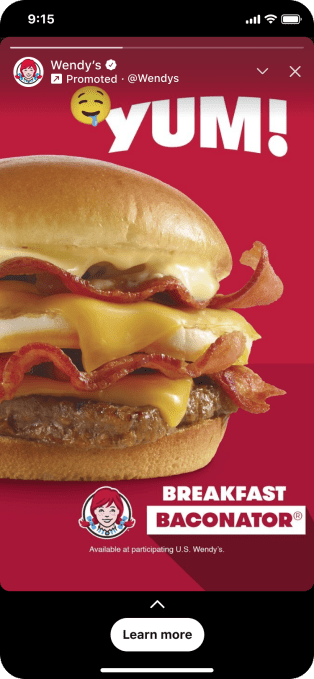
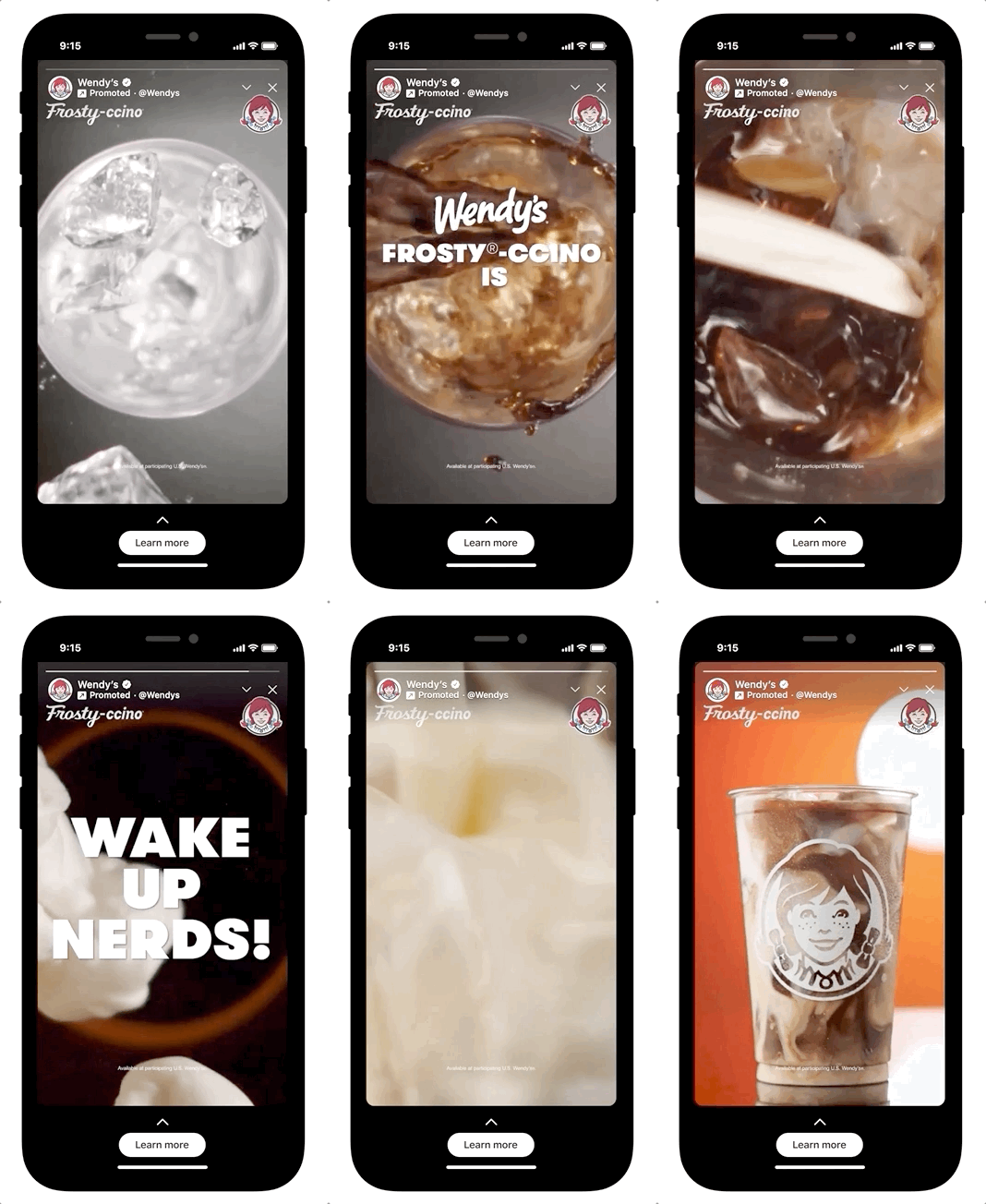
Ads are coming to Twitter’s version of Stories, known as Fleets. The company announced today it will began pilot testing Fleet ads in the U.S., which will bring full-screen, vertical format ads to Twitter for the first time, allowing it to better compete with the vertical ads offered across social media platforms, including Facebook, Instagram, Snapchat and TikTok, among others.

The new Fleet ads will appear in between Fleets from people you follow and will support both images and video in 9:16 format. The video ads support up to 30-seconds of content, and brands can also include a “swipe up” call-to-action within their ads.

For video, this is shorter than what Instagram offers (up to 120 seconds) or TikTok (up to 60 seconds), but is in line with best practices which stress that shorter ads can be better.

Twitter didn’t say how often you’ll see a Fleet ad as you swipe, saying only that it will “innovate, test and continue to adapt” in this area, as it learns how people engage.

Advertisers, meanwhile, will receive standard Twitter ad metrics for their Fleet ads, including impressions, profile visits, clicks, website visits, and more. And for video ads, Twitter will report video views, 6s video views, starts, completes, quartile reporting and other metrics.

Image Credits: Twitter

The company is launching the pilot program in the U.S. with just 10 advertisers, including those in tech, retail, dining and CPG verticals.

Twitter says the pilot will help the company to understand how well these types of ads perform on Twitter, which will inform the company not only how to better optimize Fleet ads going forward, but also other areas where it may launch full-screen ads further down the road. In addition, it wants to learn how people feel about and engage with full-screen ads, as the test continues.

Twitter had first begun experimenting with Fleets in spring 2020 as a way to offer a Stories-like product experience where users could post ephemeral content. At the time, the company hoped Fleets would encourage more hesitant users to share content to the platform, as Fleets disappeared after 24 hours, reducing the pressure to perform that comes with posting directly. They also don’t circulate Twitter like retweets and quote tweets do, nor do they show up in Search or Moments.

Image Credits: Twitter

The feature rolled out to global users in November 2020. They were initially criticized by some who felt that Fleets were yet another example of how all social apps were starting to look the same. Nevertheless, Fleets have now become a core part of the Twitter experience.

Today, people use Fleets to point to other tweets they’ve posted, or to share personal updates, photos, and commentary. However, unlike Stories on other platforms, like Snapchat or Instagram, Fleets still offer a fairly bare bones experience in terms of creator tools. You can change the background color, add stickers and text, but that’s about it.

Twitter declined to say how many or what percentage of Twitter’s active user base has now adopted Fleets, noting instead that 73% of those who post Fleets say they also browse what others are sharing. The company says it plans to roll out new updates and features to Fleets in the future, as it continues to invest in the product.

Fleet ads will launch today in the U.S. across both iOS and Android.


from Social – TechCrunch https://ift.tt/3wNWdJT
via IFTTT