This is default featured slide 1 title

Go to Blogger edit html and find these sentences.Now replace these sentences with your own descriptions.This theme is Bloggerized by Lasantha Bandara - Premiumbloggertemplates.com.

This is default featured slide 2 title

Go to Blogger edit html and find these sentences.Now replace these sentences with your own descriptions.This theme is Bloggerized by Lasantha Bandara - Premiumbloggertemplates.com.

This is default featured slide 3 title

Go to Blogger edit html and find these sentences.Now replace these sentences with your own descriptions.This theme is Bloggerized by Lasantha Bandara - Premiumbloggertemplates.com.

This is default featured slide 4 title

Go to Blogger edit html and find these sentences.Now replace these sentences with your own descriptions.This theme is Bloggerized by Lasantha Bandara - Premiumbloggertemplates.com.

This is default featured slide 5 title

Go to Blogger edit html and find these sentences.Now replace these sentences with your own descriptions.This theme is Bloggerized by Lasantha Bandara - Premiumbloggertemplates.com.

Google faces a major multi-state antitrust lawsuit over Google Play fees

A group of 37 attorneys general filed a second major multi-state antitrust lawsuit against Google Wednesday, accusing the company of abusing its market power to stifle competitors and forcing consumers into in-app payments that grant the company a hefty cut.

New York Attorney General Letitia James is co-leading the suit alongside with the Tennessee, North Carolina and Utah attorneys general. The bipartisan coalition represents 36 U.S. states, including California, Florida, Massachusetts, New Jersey, New Hampshire, Colorado and Washington, as well as the District of Columbia.

“Through its illegal conduct, the company has ensured that hundreds of millions of Android users turn to Google, and only Google, for the millions of applications they may choose to download to their phones and tablets,” James said in a press release. “Worse yet, Google is squeezing the lifeblood out of millions of small businesses that are only seeking to compete.”

In December, 35 states filed a separate antitrust suit against Google, alleging that the company engaged in illegal behavior to maintain a monopoly on the search business. The Justice Department filed its own antitrust case focused on search last October.

In the new lawsuit, embedded below, the bipartisan coalition of states allege that Google uses “misleading” security warnings to keep consumers and developers within its walled app garden, the Google Play store. But the fees that Google collects from Android app developers are likely the meat of the case.

“Not only has Google acted unlawfully to block potential rivals from competing with its Google Play Store, it has profited by improperly locking app developers and consumers into its own payment processing system and then charging high fees,” District of Columbia Attorney General Karl Racine said.

Like Apple, Google herds all app payment processing into its own service, Google Play Billing, and reaps the rewards: a 30 percent cut of all payments. Much of the criticism here is a case that could — and likely will — be made against Apple, which exerts even more control over its own app ecosystem. Google doesn’t have an iMessage equivalent exclusive app that keeps users locked in in quite the same way.

While the lawsuit discusses Google’s “monopoly power” in the app marketplace, the elephant in the room is Apple — Google’s thriving direct competitor in the mobile software space. The lawsuit argues that consumers face pressure to stay locked into the Android ecosystem, but on the Android side at least, much of that is ultimately familiarity and sunk costs. The argument on the Apple side of the equation here is likely much stronger.

The din over tech giants squeezing app developers with high mobile payment fees is just getting louder. The new multi-state lawsuit is the latest beat, but the topic has been white hot since Epic took Apple to court over its desire to bypass Apple’s fees by accepting mobile payments outside the App Store. When Epic set up a workaround, Apple kicked it out of the App Store and Epic Games v. Apple was born.

The Justice Department is reportedly already interested in Apple’s own app store practices, along with many state AGs who could launch a separate suit against the company at any time.


from Social – TechCrunch https://ift.tt/3ACiXPO
via IFTTT

TikTok wants you to send video resumes directly to brands to land your next gig

A new pilot program from TikTok would inject a little LinkedIn into the youthful video-based social network.

TikTok announced that starting today it will invite users to submit video resumes to participating companies, including Target, Chipotle, Shopify, Meredith, NASCAR and the WWE. The company encourages applicants to show off their skills in a creative way while tagging the content with the hashtag #TikTokResumes.

The pilot program is TikTok’s latest effort to streamline the relationship between brands and creators, giving both even more reason to invest time and cash into the platform.

“#CareerTok is already a thriving subculture on the platform and we can’t wait to see how the community embraces TikTok Resumes and helps to reimagine recruiting and job discovery,” TikTok Global Head of Marketing Nick Tran said of the pilot.

TikTok resumes sample page

The new pilot program will be discoverable through the dedicated hashtag and on standalone site tiktokresumes.com, which also has some tips for applying and sample videos. On that site, anyone can browse job listings by employer and fill out a short questionnaire, attaching their video link. And yes, for better or worse, pointing potential employers to your LinkedIn profile is still encouraged.

TikTok views the new pilot as a “natural extension” of its college ambassador program which recruits students to serve as on-campus representatives promoting the social network’s brand. The pilot program will accept TikTok resumes through July 31.

Of the participating brands listed on the new site, many openings are just for regular ol’ jobs, like NASCAR seeking a sales rep and Target hunting for hourly warehouse workers to cover the night shift. (Should we really be encouraging unemployed people to jump through more hoops to land gigs like this?)

Some listings are more tailored to the TikTok skill set, like an opening at All Recipes for on-camera talent to teach viewers how to make fluffy biscuits or a supervising social producer role at Popsugar.

The traditional resume hasn’t changed much over the years — list the stuff you did, keep it on one page — but any brand hiring a social media manager or any other kind of content creator could be well served by TikTok’s latest creator economy experiment.


from Social – TechCrunch https://ift.tt/3ABl1rf
via IFTTT

Trump’s new lawsuits against social media companies are going nowhere fast

Trump’s spicy trio of lawsuits against the social media platforms that he believes wrongfully banned him have succeeded in showering the former president with a flurry of media attention, but that’s likely where the story ends.

Like Trump’s quixotic and ultimately empty quest to gut Section 230 of the Communications Decency Act during his presidency, the new lawsuits are all sound and fury with little legal substance to back them up.

The suits allege that Twitter, Facebook and YouTube violated Trump’s First Amendment rights by booting him from their platforms, but the First Amendment is intended to protect citizens from censorship by the government — not private industry. The irony that Trump himself was the uppermost figure in the federal government at the time probably won’t be lost on whoever’s lap this case lands in.

In the lawsuits, which also name Twitter and Facebook chief executives Jack Dorsey and Mark Zuckerberg as well as Google CEO Sundar Pichai (Susan Wojcicki escapes notice once again!), Trump accuses the three companies of engaging in “impermissible censorship resulting from threatened legislative action, a misguided reliance upon Section 230 of the Communications Decency Act, and willful participation in joint activity with federal actors.”

The suit claims that the tech companies colluded with “Democrat lawmakers,” the CDC and Dr. Anthony Fauci, who served in Trump’s own government at the time.

The crux of the argument is that communication between the tech companies, members of Congress and the federal government somehow transforms Facebook, Twitter and YouTube into “state actors” — a leap of epic proportion:

“Defendant Twitter’s status thus rises beyond that of a private company to that of a state actor, and as such, Defendant is constrained by the First Amendment right to free speech in the censorship decisions it makes.”

Trump’s own Supreme Court appointee Brett Kavanaugh issued the court’s opinion on a relevant case two years ago. It examined whether a nonprofit running public access television channels in New York qualified as a “state actor” that would be subject to First Amendment constraints. The court ruled that running the public access channels didn’t transform the nonprofit into a government entity and that it retained a private entity’s rights to make editorial decisions.

“… A private entity… who opens its property for speech by others is not transformed by that fact alone into a state actor,” Justice Kavanaugh wrote in the decision.

It’s not likely that a court would decide that talking to the government or being threatened by the government somehow transform Twitter, YouTube and Facebook into state actors either.

Trump vs. Section 230 (again)

First Amendment aside — and there’s really not much of an argument there — social media platforms are protected by Section 230 of the Communications Decency Act, a concise snippet of law that shields them from liability not just for the user-generated content they host but for the moderation decisions they make about what content to remove.

In line with Trump’s obsessive disdain for tech’s legal shield, the lawsuits repeatedly rail against Section 230. The suits try to argue that because Congress threatened to revoke tech’s 230 protections, that forced them to ban Trump, which somehow makes social media companies part of the government and subject to First Amendment constraints.

Of course, Republican lawmakers and Trump’s own administration made frequent threats about repealing Section 230, not that it changes anything because this line of argument doesn’t make much sense anyway.

The suit also argues that Congress crafted Section 230 to intentionally censor speech that is otherwise protected by the First Amendment, ignoring that the law was born in 1996, well before ubiquitous social media, and for other purposes altogether.

For the four years of his presidency, Trump’s social media activity — his tweets in particular — informed the events of the day, both nationally and globally. While other world leaders and political figures used social media to communicate or promote their actions, Trump’s Twitter account was usually the action itself.

In the shadow of his social media bans, the former president has failed to re-establish lines of communication to the internet at large. In May, he launched a new blog, “From the Desk of Donald J. Trump,” but the site was taken down just a month later after it failed to attract much interest.

The handful of pro-Trump alternative social platforms are still struggling with app store content moderation requirements at odds with their extreme views on free speech, but that didn’t stop Gettr, the latest, from going ahead with its own rocky launch last week.

Viewed in one light, Trump’s lawsuits are a platform too, his latest method for broadcasting himself to the online world that his transgressions eventually cut him off from. In that sense, they seem to have succeeded, but in all other senses, they won’t.


from Social – TechCrunch https://ift.tt/3hIP47J
via IFTTT

Trump is suing Twitter, Facebook and Google over censorship claims

In his first press event since leaving office earlier this year, former President Donald Trump announced that he would be launching a volley of class action lawsuits against Twitter, Facebook and Google and their CEOs, claiming that the three companies violated his First Amendment rights.

“We’re demanding an end to the shadow-banning, a stop to the silencing and a stop to the blacklisting, banishing and canceling that you know so well,” Trump said at the press conference, held at his Bedminster, New Jersey golf club.

Following the January 6 attack on the Capitol, social media platforms swiftly revoked then President Trump’s posting privileges. For years, Trump tested the boundaries of platforms’ policies around misinformation and even violent threats, but his role in the events of that day crossed a line. Trump soon found himself without a megaphone with which to reach his many millions of followers across Twitter, Facebook and YouTube.

Trump’s fate on Twitter is known: the former president faces a lifetime ban there. But on Facebook and YouTube, there’s a possibility that his accounts could be restored. Facebook is currently deliberating that decision in a back-and-forth exchange with its new external policy making body, the Facebook Oversight Board.

Trump will be the lead plaintiff in the suits, which are being filed in the U.S. District Court for the Southern District of Florida. The lawsuits seek “compensatory and punitive damages” and the restoration of Trump’s social media accounts.


from Social – TechCrunch https://ift.tt/2UoipMR
via IFTTT

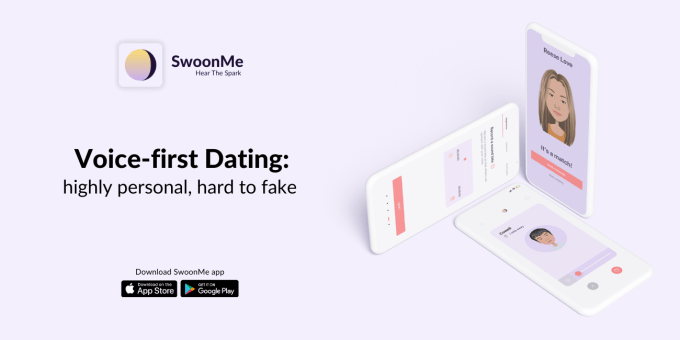
SwoonMe uses avatars and audio for its ‘less superficial’ dating app

A new startup called SwoonMe aims to fix the problem with superficial dating apps, where users primarily make decisions based on how someone looks in their photos. Instead of swiping through profiles, SwoonMe’s idea is to use a combination of avatars and audio to encourage users to connect based on someone’s personality, not their appearance.

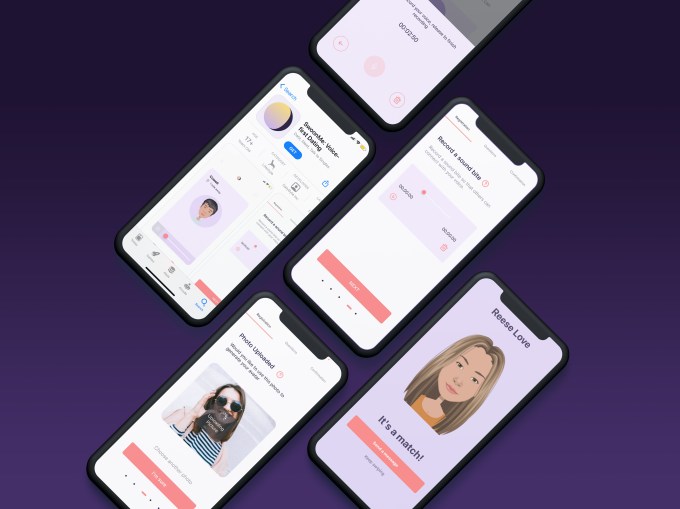
To use the app, you take a selfie which SwoonMe converts into an avatar. This is what others will see when they come to your profile. You then record a voice clip to tell others about yourself and what you’re looking for in a partner. You’ll also answer a few questions — like whether you’re looking for marriage or something more casual and what your love language is (e.g. physical touch, gifts, words of affirmation, etc.), among other things.

The result is that when people scroll through SwoonMe, they’re not making snap decisions based on what they’re seeing, but are rather making more thoughtful decisions based what they hear. When two people match, the app encourages them to continue to get to know each other using voice messages and soon, icebreaker games — not texting and photo-sharing. As they communicate, their avatar will slowly unveil their real photo.

Image Credits: SwoonMe

The idea for SwoonMe comes from Tanvi Gupta, a former Facebook product specialist who was involved with a number of high-profile products, including those that shipped in Messenger and in Instagram Direct, such as Messenger reactions, a Messenger redesign, chat heads on Android, and more. This experience taught her a lot about launching new products built from scratch, and helping them to find product market fit, she says.

But Gupta decided to build SwoonMe because of her own personal struggles with modern-day dating apps, where men who messaged her immediately wanted to share selfies and meet her without having read anything on her profile.

“The dating world always felt super-indexed on looks, given the proliferation of apps like Tinder and Bumble,” Gupta explains. “And what I felt was they were not solving my personal need for somebody who wants to connect for a long-term relationship,” she says.

Gupta began work on SwoonMe during the pandemic, when the market was hungry for new ways to connect people online — a trend that had led the to the launch of audio apps like Clubhouse, and later, its many clones. The founder says she was also inspired by Clubhouse, as it demonstrated the potential in audio-based social networking, including how it could be used for more personal connections.

“Platforms like Clubhouse have shown that taking video and looks out of the equation allow people to lean into actual topics,” Gupta says. “It creates new levels of intimacy and interaction, and we’re basically trying to capture this with SwoonMe, but in the dating world.”

Though SwoonMe isn’t necessarily limited only to people looking for relationships, it may initially appeal to that demographic because it requires a bit more time and focus to listen to soundbites and engage in audio-based messaging. This experience would be more likely to attract someone who is taking dating more seriously, not someone in search of a quick hookup or causal connection.

Image Credits: SwoonMe

SwoonMe is not the first social app to use avatars instead of photos, however. Avatar-based social discovery apps have been popular in other markets in Asia and in Brazil, but have yet to make their way to the U.S. That may soon change, though, as Tinder parent Match Group this year acquired Seoul-based social app maker Hyperconnect — its biggest acquisition ever at $1.73 billion. AR-powered avatars are a part of the app portfolio that came with the deal.

The startup is also not the first dating app to take the idea of the “face reveal” — a somewhat gimmicky concept popularized by online creators — into the world of dating. There are a number of voice-based based apps on the app stores today, which have seen varying degrees of success.

In February, for example, an app called Jigsaw raised $3.7 million for its own so-called “anti-superficial” dating app that places puzzle pieces over users’ faces which can only be removed after a pre-set amount of in-app engagement. But in Jigsaw’s case, the puzzle pieces were to be applied over full body photos, and it had banned selfies. That means the app was doing the opposite of what it proposes. Instead of encouraging daters to ignore images, some users were likely making decisions based on what someone’s body looked like in their photo with their face removed. That’s even worse. (After expressing my concerns to Jigsaw and declining to cover them, the startup told me it ended its selfie ban and now accepts a wide range of imagery.)

Gupta also feels strongly that women, in particular, deserve a different way to meet people that’s not about their looks alone.

“As a female, one of the main drivers behind founding company like SwoonMe, which is audio-first and not photos, is because I personally am tired, and have been tired, of being objectified by men…We’re living in 21st century and I am done with that. I want someone to like me because of my personality, because of my voice, because of what I bring into a relationship,” she says. “Sure, physical attraction is important, but that is not the only thing,” Gupta adds.

As it turns out, there’s demand for a less superficial dating app from men, too. In fact, SwoonMe currently has more male users than female at present. (The app, to be clear, is open to all gender identities and sexual orientations as the issues it aims to solve can impact everyone. It also offers an inclusive sign-up flow.)

Though it’s too soon to report user numbers and growth, Gupta says the app has “a good number” of early testers and they’ve been able to get solid user feedback so far.

The bigger question for SwoonMe is whether or not it can attract people looking for real relationships, as many of those people  avoid dating apps altogether. It’s also competing with a growing number of video-first dating apps, like Snack, aimed at Gen Z users who are more comfortable filming themselves thanks to their use of social media platforms like TikTok.

At launch, SwoonMe doesn’t generate revenue, but plans to add premium features if it reaches scale. Longer-term, the company would like to expand its platform beyond dating to help keep couples connected during their relationship, too.

SwoonMe soft-launched across both the App Store and Play Store for beta testing, but is today announcing its official launch. Currently, SwoonMe is targeting the dating markets of San Francisco and L.A., but is open to anyone who wants to try it.

The startup is a small team and currently working to raise $1 million in seed funding.


from Social – TechCrunch https://ift.tt/3yy853w
via IFTTT

YouTube’s recommender AI still a horrorshow, finds major crowdsourced study

For years YouTube’s video-recommending algorithm has stood accused of fuelling a grab-bag of societal ills by feeding users an AI-amplified diet of hate speech, political extremism and/or conspiracy junk/disinformation for the profiteering motive of trying to keep billions of eyeballs stuck to its ad inventory.

And while YouTube’s tech giant parent Google has, sporadically, responded to negative publicity flaring up around the algorithm’s antisocial recommendations — announcing a few policy tweaks or limiting/purging the odd hateful account — it’s not clear how far the platform’s penchant for promoting horribly unhealthy clickbait has actually been rebooted.

The suspicion remains nowhere near far enough.

New research published today by Mozilla backs that notion up, suggesting YouTube’s AI continues to puff up piles of ‘bottom-feeding’/low grade/divisive/disinforming content — stuff that tries to grab eyeballs by triggering people’s sense of outrage, sewing division/polarization or spreading baseless/harmful disinformation — which in turn implies that YouTube’s problem with recommending terrible stuff is indeed systemic; a side-effect of the platform’s rapacious appetite to harvest views to serve ads.

That YouTube’s AI is still — per Mozilla’s study — behaving so badly also suggests Google has been pretty successful at fuzzing criticism with superficial claims of reform.

The mainstay of its deflective success here is likely the primary protection mechanism of keeping the recommender engine’s algorithmic workings (and associated data) hidden from public view and external oversight — via the convenient shield of ‘commercial secrecy’.

But regulation that could help crack open proprietary AI blackboxes is now on the cards — at least in Europe.

To fix YouTube’s algorithm, Mozilla is calling for “common sense transparency laws, better oversight, and consumer pressure” — suggesting a combination of laws that mandate transparency into AI systems; protect independent researchers so they can interrogate algorithmic impacts; and empower platform users with robust controls (such as the ability to opt out of “personalized” recommendations) are what’s needed to rein in the worst excesses of the YouTube AI.

Regrets, YouTube users have had a few…

To gather data on specific recommendations being made made to YouTube users — information that Google does not routinely make available to external researchers — Mozilla took a crowdsourced approach, via a browser extension (called RegretsReporter) that lets users self-report YouTube videos they “regret” watching.

The tool can generate a report which includes details of the videos the user had been recommended, as well as earlier video views, to help build up a picture of how YouTube’s recommender system was functioning. (Or, well, ‘dysfunctioning’ as the case may be.)

The crowdsourced volunteers whose data fed Mozilla’s research reported a wide variety of ‘regrets’, including videos spreading COVID-19 fear-mongering, political misinformation and “wildly inappropriate” children’s cartoons, per the report — with the most frequently reported content categories being misinformation, violent/graphic content, hate speech and spam/scams.

A substantial majority (71%) of the regret reports came from videos that had been recommended by YouTube’s algorithm itself, underscoring the AI’s starring role in pushing junk into people’s eyeballs.

The research also found that recommended videos were 40% more likely to be reported by the volunteers than videos they’d searched for themselves.

Mozilla even found “several” instances when the recommender algorithmic put content in front of users that violated YouTube’s own community guidelines and/or was unrelated to the previous video watched. So a clear fail.

A very notable finding was that regrettable content appears to be a greater problem for YouTube users in non-English speaking countries: Mozilla found YouTube regrets were 60% higher in countries without English as a primary language — with Brazil, Germany and France generating what the report said were “particularly high” levels of regretful YouTubing. (And none of the three can be classed as minor international markets.)

Pandemic-related regrets were also especially prevalent in non-English speaking countries, per the report — a worrying detail to read in the middle of an ongoing global health crisis.

The crowdsourced study — which Mozilla bills as the largest-ever into YouTube’s recommender algorithm — drew on data from more than 37,000 YouTube users who installed the extension, although it was a subset of 1,162 volunteers — from 91 countries — who submitted reports that flagged 3,362 regrettable videos which the report draws on directly.

These reports were generated between July 2020 and May 2021.

What exactly does Mozilla mean by a YouTube “regret”? It says this is a crowdsourced concept based on users self-reporting bad experiences on YouTube, so it’s a subjective measure. But Mozilla argues that taking this “people-powered” approach centres the lived experiences of Internet users and is therefore helpful in foregrounding the experiences of marginalised and/or vulnerable people and communities (vs, for example, applying only a narrower, legal definition of ‘harm’).

“We wanted to interrogate and explore further [people’s experiences of falling down the YouTube ‘rabbit hole’] and frankly confirm some of these stories — but then also just understand further what are some of the trends that emerged in that,” explained Brandi Geurkink, Mozilla’s senior manager of advocacy and the lead researcher for the project, discussing the aims of the research.

“My main feeling in doing this work was being — I guess — shocked that some of what we had expected to be the case was confirmed… It’s still a limited study in terms of the number of people involved and the methodology that we used but — even with that — it was quite simple; the data just showed that some of what we thought was confirmed.

“Things like the algorithm recommending content essentially accidentally, that it later is like ‘oops, this actually violates our policies; we shouldn’t have actively suggested that to people’… And things like the non-English-speaking user base having worse experiences — these are things you hear discussed a lot anecdotally and activists have raised these issues. But I was just like — oh wow, it’s actually coming out really clearly in our data.”

Mozilla says the crowdsourced research uncovered “numerous examples” of reported content that would likely or actually breach YouTube’s community guidelines — such as hate speech or debunked political and scientific misinformation.

But it also says the reports flagged a lot of what YouTube “may” consider ‘borderline content’. Aka, stuff that’s harder to categorize — junk/low quality videos that perhaps toe the acceptability line and may therefore be trickier for the platform’s algorithmic moderation systems to respond to (and thus content that may also survive the risk of a take down for longer).

However a related issue the report flags is that YouTube doesn’t provide a definition for borderline content — despite discussing the category in its own guidelines — hence, says Mozilla, that makes the researchers’ assumption that much of what the volunteers were reporting as ‘regretful’ would likely fall into YouTube’s own ‘borderline content’ category impossible to verify.

The challenge of independently studying the societal effects of Google’s tech and processes is a running theme underlying the research. But Mozilla’s report also accuses the tech giant of meeting YouTube criticism with “inertia and opacity”.

It’s not alone there either. Critics have long accused YouTube’s ad giant parent of profiting off-of engagement generated by hateful outrage and harmful disinformation — allowing “AI-generated bubbles of hate” surface ever more baleful (and thus stickily engaging) stuff, exposing unsuspecting YouTube users to increasingly unpleasant and extremist views, even as Google gets to shield its low grade content business under a user-generated content umbrella.

Indeed, ‘falling down the YouTube rabbit hole’ has become a well-trodden metaphor for discussing the process of unsuspecting Internet users being dragging into the darkest and nastiest corners of the web. This user reprogramming taking place in broad daylight via AI-generated suggestions that yell at people to follow the conspiracy breadcrumb trail right from inside a mainstream web platform.

Back as 2017 — when concern was riding high about online terrorism and the proliferation of ISIS content on social media — politicians in Europe were accusing YouTube’s algorithm of exactly this: Automating radicalization.

However it’s remained difficult to get hard data to back up anecdotal reports of individual YouTube users being ‘radicalized’ after viewing hours of extremist content or conspiracy theory junk on Google’s platform.

Ex-YouTube insider — Guillaume Chaslot — is one notable critic who’s sought to pull back the curtain shielding the proprietary tech from deeper scrutiny, via his algotransparency project.

Mozilla’s crowdsourced research adds to those efforts by sketching a broad — and broadly problematic — picture of the YouTube AI by collating reports of bad experiences from users themselves.

Of course externally sampling platform-level data that only Google holds in full (at its true depth and dimension) can’t be the whole picture — and self-reporting, in particular, may introduce its own set of biases into Mozilla’s data-set. But the problem of effectively studying big tech’s blackboxes is a key point accompanying the research, as Mozilla advocates for proper oversight of platform power.

In a series of recommendations the report calls for “robust transparency, scrutiny, and giving people control of recommendation algorithms” — arguing that without proper oversight of the platform, YouTube will continue to be harmful by mindlessly exposing people to damaging and braindead content.

The problematic lack of transparency around so much of how YouTube functions can be picked up from other details in the report. For example, Mozilla found that around 9% of recommended regrets (or almost 200 videos) had since been taken down — for a variety of not always clear reasons (sometimes, presumably, after the content was reported and judged by YouTube to have violated its guidelines).

Collectively, just this subset of videos had had a total of 160M views prior to being removed for whatever reason.

In other findings, the research found that regretful views tend to perform well on the platform.

A particular stark metric is that reported regrets acquired a full 70% more views per day than other videos watched by the volunteers on the platform — lending weight to the argument that YouTube’s engagement-optimising algorithms disproportionately select for triggering/misinforming content more often than quality (thoughtful/informing) stuff simply because it brings in the clicks.

While that might be great for Google’s ad business, it’s clearly a net negative for democratic societies which value truthful information over nonsense; genuine public debate over artificial/amplified binaries; and constructive civic cohesion over divisive tribalism.

But without legally-enforced transparency requirements on ad platforms — and, most likely, regulatory oversight and enforcement that features audit powers — these tech giants are going to continue to be incentivized to turn a blind eye and cash in at society’s expense.

Mozilla’s report also underlines instances where YouTube’s algorithms are clearly driven by a logic that’s unrelated to the content itself — with a finding that in 43.6% of the cases where the researchers had data about the videos a participant had watched before a reported regret the recommendation was completely unrelated to the previous video.

The report gives examples of some of these logic-defying AI content pivots/leaps/pitfalls — such as a person watching videos about the U.S. military and then being recommended a misogynistic video entitled ‘Man humiliates feminist in viral video.’

In another instance, a person watched a video about software rights and was then recommended a video about gun rights. So two rights make yet another wrong YouTube recommendation right there.

In a third example, a person watched an Art Garfunkel music video and was then recommended a political video entitled ‘Trump Debate Moderator EXPOSED as having Deep Democrat Ties, Media Bias Reaches BREAKING Point.’

To which the only sane response is, umm what???

YouTube’s output in such instances seems — at best — some sort of ‘AI brain fart’.

A generous interpretation might be that the algorithm got stupidly confused. Albeit, in a number of the examples cited in the report, the confusion is leading YouTube users toward content with a right-leaning political bias. Which seems, well, curious.

Asked what she views as the most concerning findings, Mozilla’s Geurkink told TechCrunch: “One is how clearly misinformation emerged as a dominant problem on the platform. I think that’s something, based on our work talking to Mozilla supporters and people from all around the world, that is a really obvious thing that people are concerned about online. So to see that that is what is emerging as the biggest problem with the YouTube algorithm is really concerning to me.”

She also highlighted the problem of the recommendations being worse for non-English-speaking users as another major concern, suggesting that global inequalities in users’ experiences of platform impacts “doesn’t get enough attention” — even when such issues do get discussed.

Responding to Mozilla’s report in a statement, a Google spokesperson sent us this statement:

“The goal of our recommendation system is to connect viewers with content they love and on any given day, more than 200 million videos are recommended on the homepage alone. Over 80 billion pieces of information is used to help inform our systems, including survey responses from viewers on what they want to watch. We constantly work to improve the experience on YouTube and over the past year alone, we’ve launched over 30 different changes to reduce recommendations of harmful content. Thanks to this change, consumption of borderline content that comes from our recommendations is now significantly below 1%.”

Google also claimed it welcomes research into YouTube — and suggested it’s exploring options to bring in external researchers to study the platform, without offering anything concrete on that front.

At the same time, its response queried how Mozilla’s study defines ‘regrettable’ content — and went on to claim that its own user surveys generally show users are satisfied with the content that YouTube recommends.

In further non-quotable remarks, Google noted that earlier this year it started disclosing a ‘violative view rate‘ (VVR) metric for YouTube — disclosing for the first time the percentage of views on YouTube that comes from content that violates its policies.

The most recent VVR stands at 0.16-0.18% — which Google says means that out of every 10,000 views on YouTube, 16-18 come from violative content. It said that figure is down by more than 70% when compared to the same quarter of 2017 — crediting its investments in machine learning as largely being responsible for the drop.

However, as Geurkink noted, the VVR is of limited use without Google releasing more data to contextualize and quantify how far its AI was involved in accelerating views of content its own rules state shouldn’t be viewed on its platform. Without that key data the suspicion must be that the VVR is a nice bit of misdirection.

“What would be going further than [VVR] — and what would be really, really helpful — is understanding what’s the role that the recommendation algorithm plays in this?” Geurkink told us on that, adding: “That’s what is a complete blackbox still. In the absence of greater transparency [Google’s] claims of progress have to be taken with a grain of salt.”

Google also flagged a 2019 change it made to how YouTube’s recommender algorithm handles ‘borderline content’ — aka, content that doesn’t violate policies but falls into a problematic grey area — saying that that tweak had also resulted in a 70% drop in watchtime for this type of content.

Although the company confirmed this borderline category is a moveable feast — saying it factors in changing trends as well as context and also works with experts to determine what’s get classed as borderline — which makes the aforementioned percentage drop pretty meaningless since there’s no fixed baseline to measure against.

It’s notable that Google’s response to Mozilla’s report makes no mention of the poor experience reported by survey participants in non-English-speaking markets. And Geurkink suggested that, in general, many of the claimed mitigating measures YouTube applies are geographically limited — i.e. to English-speaking markets like the US and UK. (Or at least arrive in those markets first, before a slower rollout to other places.) 

A January 2019 tweak to reduce amplification of conspiracy theory content in the US was only expanded to the UK market months later — in August — for example.

“YouTube, for the past few years, have only been reporting on their progress of recommendations of harmful or borderline content in the US and in English-speaking markets,” she also said. “And there are very few people questioning that — what about the rest of the world? To me that is something that really deserves more attention and more scrutiny.”

We asked Google to confirm whether it had since applied the 2019 conspiracy theory related changes globally — and a spokeswoman told us that it had. But the much higher rate of reports made to Mozilla of — a yes broader measure of — ‘regrettable’ content being made in non-English-speaking markets remains notable.

And while there could be others factors at play, which might explain some of the disproportionately higher reporting, the finding may also suggest that, where YouTube’s negative impacts are concerned, Google directs greatest resource at markets and languages where its reputational risk and the capacity of its machine learning tech to automate content categorization are strongest.

Yet any such unequal response to AI risk obviously means leaving some users at greater risk of harm than others — adding another harmful dimension and layer of unfairness to what is already a multi-faceted, many-headed-hydra of a problem.

It’s yet another reason why leaving it up to powerful platforms to rate their own AIs, mark their own homework and counter genuine concerns with self-serving PR is for the birds.

(In additional filler background remarks it sent us, Google described itself as the first company in the industry to incorporate “authoritativeness” into its search and discovery algorithms — without explaining when exactly it claims to have done that or how it imagined it would be able to deliver on its stated mission of ‘organizing the world’s information and making it universally accessible and useful’ without considering the relative value of information sources… So color us baffled at that claim. Most likely it’s a clumsy attempt to throw disinformation shade at rivals.)

Returning to the regulation point, an EU proposal — the Digital Services Act — is set to introduce some transparency requirements on large digital platforms, as part of a wider package of accountability measures. And asked about this Geurkink described the DSA as “a promising avenue for greater transparency”.

But she suggested the legislation needs to go further to tackle recommender systems like the YouTube AI.

“I think that transparency around recommender systems specifically and also people having control over the input of their own data and then the output of recommendations is really important — and is a place where the DSA is currently a bit sparse, so I think that’s where we really need to dig in,” she told us.

One idea she voiced support for is having a “data access framework” baked into the law — to enable vetted researchers to get more of the information they need to study powerful AI technologies — i.e. rather than the law trying to come up with “a laundry list of all of the different pieces of transparency and information that should be applicable”, as she put it.

The EU also now has a draft AI regulation on the table. The legislative plan takes a risk-based approach to regulating certain applications of artificial intelligence. However it’s not clear whether YouTube’s recommender system would fall under one of the more closely regulated categories — or, as seems more likely (at least with the initial Commission proposal), fall entirely outside the scope of the planned law.

“An earlier draft of the proposal talked about systems that manipulate human behavior which is essentially what recommender systems are. And one could also argue that’s the goal of advertising at large, in some sense. So it was sort of difficult to understand exactly where recommender systems would fall into that,” noted Geurkink.

“There might be a nice harmony between some of the robust data access provisions in the DSA and the new AI regulation,” she added. “I think transparency is what it comes down to, so anything that can provide that kind of greater transparency is a good thing.

“YouTube could also just provide a lot of this… We’ve been working on this for years now and we haven’t seen them take any meaningful action on this front but it’s also, I think, something that we want to keep in mind — legislation can obviously take years. So even if a few of our recommendations were taken up [by Google] that would be a really big step in the right direction.”


from Social – TechCrunch https://ift.tt/3jOtQIr
via IFTTT

Gettr, the latest pro-Trump social network, is already a mess

Well, that was fast. Just days after a Twitter clone from former Trump spokesperson Jason Miller launched, the new social network is already beset by problems.

For one, hackers quickly leveraged Gettr’s API to scrape the email addresses of more than 85,000 of its users. User names, names and birthdays were also part of the scraped data set, which was surfaced by Alon Gal, co-founder of cybersecurity firm Hudson Rock.

“When threat actors are able to extract sensitive information due to neglectful API implementations, the consequence is equivalent to a data breach and should be handled accordingly by the firm [and] examined by regulators,” Gal told TechCrunch.

Last week, TechCrunch’s own Zack Whittaker predicted that Gettr would soon see its data scraped through its API.

The scraped data is just one of Gettr’s headaches. The app actually went live in the App Store and Google Play last month but left beta on July 4 following a launch post in Politico. While the app is meant to appeal to the famously anti-China Trump sphere, Gettr apparently received early funding from Chinese billionaire Guo Wengui, an ally of former Trump advisor Steve Bannon. Earlier this year, The Washington Post reported that Guo is at the center of a massive online disinformation network that spreads anti-vaccine claims and QAnon conspiracies.

On July 2, the app’s team apologized for signup delays citing a spike in downloads, but a bit of launch downtime is probably the least of its problems. Over the weekend, a number of official Gettr accounts including Marjorie Taylor-Greene, Steve Bannon, and Miller’s own were compromised, raising more questions about the app’s shoddy security practices.

That incident aside, fake accounts overwhelm any attempt to find verified users on Gettr. That goes for the app’s own recommendations too: a fake brand account for Steam was among the app’s own recommendations during TechCrunch’s testing.

Another red flag: The app’s design is conspicuously identical to Twitter and appears to have used the company’s API to copy some users’ follower counts and profiles. Gettr encourages new users to use their Twitter handle in the sign up process, saying that it will allow tweets to be copied over in some cases (we signed up, but this didn’t work for us). TechCrunch reached out to Twitter about Gettr’s striking similarities and the use of its API but the company declined to comment.

On mobile, Gettr is basically an exact clone of Twitter — albeit one that’s very rough around the edges. Some of Gettr’s copy is stilted and strange, including the boast that it’s a “non-bias” social network that “tried the best to provide best software quality to the users, allow anyone to express their opinion freely.”

The company is positioning itself as an alternative for anyone who believes that mainstream social networks are hostile to far right ideas. Gettr’s website beckons new users with familiar Trumpian messaging: “Don’t be Cancelled. Flex Your 1st Amendment. Celebrate Freedom.”

“Hydroxycholoroquine works!” Miller shared (Gettr’d?) over the weekend, quoting the former president. “And nobody is going to take down this post or suspend this account! #GETTR.” So far on Gettr, content moderation is either lax or nonexistent. But as we’ve seen with Parler and other havens for sometimes violent conspiracies, that approach can only last so long.

In spite of being widely associated with Trump through Miller and former Trump campaign staffer Tim Murtaugh, the former president doesn’t yet have a presence on the app. Some figures from Trump’s orbit have established profiles on Gettr, including Steve Bannon (84.7K followers) and Mike Pompeo (1.3M followers), but a search for Trump only brings up unofficial accounts. Bloomberg reported that Trump has no plans to join the app. (Given Gettr’s preponderance of Sonic the Hedgehog porn, we can’t exactly blame him.)

It’s hard to say whether the app’s technical issues or Trump’s absence will dampen interest in Gettr. According to estimates from Sensor Tower, Gettr has racked up roughly 1.3 million installs globally since June, with Brazil trailing the U.S. as the app’s second biggest market.

The online pro-Trump ecosystem remains scattered in mid-2021. With Trump banned and the roiling conspiracy network around QAnon no longer welcome on Facebook and Twitter, Gettr positioned itself as a refuge for mainstream social media’s many outcasts. But given Gettr’s mounting early woes, the sketchy Twitter clone’s moment in the sun might already be coming to an end.


from Social – TechCrunch https://ift.tt/3jOrdpT
via IFTTT