This is default featured slide 1 title

Go to Blogger edit html and find these sentences.Now replace these sentences with your own descriptions.This theme is Bloggerized by Lasantha Bandara - Premiumbloggertemplates.com.

This is default featured slide 2 title

Go to Blogger edit html and find these sentences.Now replace these sentences with your own descriptions.This theme is Bloggerized by Lasantha Bandara - Premiumbloggertemplates.com.

This is default featured slide 3 title

Go to Blogger edit html and find these sentences.Now replace these sentences with your own descriptions.This theme is Bloggerized by Lasantha Bandara - Premiumbloggertemplates.com.

This is default featured slide 4 title

Go to Blogger edit html and find these sentences.Now replace these sentences with your own descriptions.This theme is Bloggerized by Lasantha Bandara - Premiumbloggertemplates.com.

This is default featured slide 5 title

Go to Blogger edit html and find these sentences.Now replace these sentences with your own descriptions.This theme is Bloggerized by Lasantha Bandara - Premiumbloggertemplates.com.

New Instagram Insights make its TikTok competitor Reels more appealing

Over the last year, Instagram has added a slew of features to help independent creators make a living, like Instagram Shop and Shopping in Reels. Today, Instagram launched new Insights for Reels and Live on its Professional Dashboard, giving businesses and creators essential data about the reach of their content. These tools will help Reels catch up with its competitor TikTok, which already offers users detailed analytics. As Instagram and TikTok continue trying to keep up with one another, it can only be a good thing for influencers and small businesses that use these platforms to bolster their income. 

Previously, Instagram creators could only view publicly available metrics, like the views, likes or comments on a Reel. Now, they will be able to access data like Accounts Reached, Saves and Shares for their Reels. Instagram will also share the number of Peak Concurrent Viewers that tune in to watch their Live videos. Plus, in the Account Insights section of the app, Instagram will add breakdowns that show users what kinds of accounts they are reaching, and which content formats are generating their strongest engagement. 

For entrepreneurs and content creators whose businesses run on social commerce, these analytics might not change the game, but they certainly make it easier to play. Shopping in Reels makes in-app sales more convenient, but until now, scant data was available to help businesses tailor their Reels to reach potential customers. On the other hand, TikTok’s analytics have long provided creators with data on their videos’ average watch time, types of traffic sources and performance by geographic location. The viral video app announced earlier this month that it would work with specific brands, like the streetwear label Hype, to test in-app sales. This would deepen its competition with Instagram, but it’s still unclear when the feature will be widely available. So, Instagram’s Insights, combined with established in-app shopping, can create a perfect storm for content creators to better reach and monetize their target audiences.

“I always thought it was weird that there were no Insights for Reels. Sometimes it feels like shooting in the dark,” Quinn Jones told TechCrunch. Jones is one of the owners of KIKAY, a handmade jewelry business based in Los Angeles. With more than 90,000 followers across Instagram and TikTok, the Gen Z creators rely on social media to expand their audience and increase their sales. Though KIKAY has gone viral on TikTok, Jones said that Instagram has been the best way for the small business to gain followers.

“Insights are definitely going to be useful going forward,” said Jones. “It’s currently hard to tell the actual effective reach your videos have, and seeing Insights means more feedback to help improve content.”

For influencers, these analytics are also helpful for collaborating with brands on sponsored content. 

“I’ve been wanting Insights for Reels for the longest time. All we know now is views, likes and comments,” said Cara Cochran, an LGBTQ+ content creator and microinfluencer. She notes that brands have already been pushing creators to make videos on Reels ever since Instagram redesigned its interface to place the short videos front-and-center. 

“Now that they are rolling out analytics, I think we will see a lot of brands push for more and more Reels instead of just static posts,” she says. “I think it brings their products to life in a whole new way, and it almost works like a commercial for them instead of just a static ad.” 

Instagram will begin rolling out Insights today. The company also says that over the coming months, it will add tools to help creators measure engagement over a preset time frame and begin to support Insights on desktop. 


from Social – TechCrunch https://ift.tt/3wuHHGL
via IFTTT

Delhi Police, run by India’s central government, raids Twitter offices over manipulated label

Delhi Police, controlled by India’s central government, on Monday evening raided offices of Twitter in Delhi and Gurgaon as it sought more information on why the social network tagged one of the tweets by ruling partly BJP spokesperson as “manipulated media.”

Delhi Police IT Cell team vacated both of Twitter’s offices because the offices were closed and there were no Twitter employee to engage, many local TV channels reported.

A Twitter spokesperson declined to comment.

New Delhi sent a notice to Twitter last week after the social network labeled a tweet from Sambit Patra, the spokesperson of India’s ruling party BJP, as “manipulated media.”

In the tweet, Patra had claimed that Congress, the leading opposition party in India, was using a so-called “toolkit” to derail the Indian government’s efforts against the coronavirus pandemic. Alt News, a leading fact-checking organization in India, debunked Patra’s claim.

“Delhi Police is enquiring into a complaint in which clarification is sought from the Twitter regarding the classification of a tweet by Shri Sambit Patra (BJP spokesman) as ‘manipulative’. It appears that Twitter has some information which is not known to us on the basis of which they have classified it as such,” Delhi Police said in statements to local TV channels and other journalists.

“This information is relevant to the enquiry. Special Cell which is conducting the enquiry wants to find out the truth. Twitter which has claimed to know the underlying truth should clarify,” it added.

Several policy executives and the like questioned Delhi Police’s motives.


from Social – TechCrunch https://ift.tt/3hNFhPB
via IFTTT

Beacons raises $6 million for its link-in-bio homepage builder that lets creators monetize

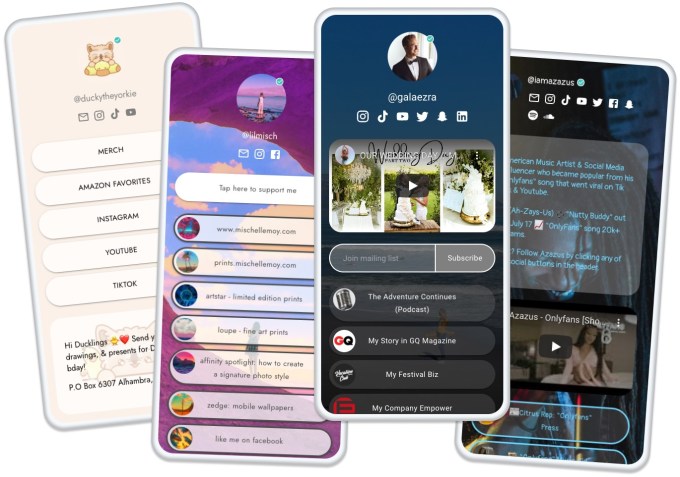
Mobile landing page builder Beacons has raised $6 million seed round to expand its vision for empowering creators to make money beyond the cramped confines of their social media profiles. The company, co-founded by Neal Jean, Jesse Zhang, Greg Luppescu and David Zeng, provides anyone who uses social media a single, mobile-optimized link hub to display to their followers.

Like competitor Linktree, Beacons gives people a way to link out to other sites directly from their TikTok, Instagram, or Twitter profile, including pointing followers toward potential income streams like donations and affiliate links. Other companies in the “link in bio” space include Shorby, Milkshake, Tap.bio, Link in Profile, bio.fm and Campsite.

Beacons launched in private beta in September 2020 after emerging out of Y Combinator’s Summer 2019 cohort. Andreessen Horowitz will lead the seed round and is joined by Atelier Ventures, The Chainsmokers’ Mantis Fund, Night Media Ventures and LOUDgg, the Brazilian esports group.

The $6 million seed round will build on $600,000 that Beacons raised in an angel round, allowing the team to hire more engineers and designers to grow its small four-person team of first-time founders.

“I think where we’re really different than Linktree is we let creators customize and personalize their pages all for free and we offer a lot more of those options on our free plan,” Beacons co-founder and CEO Neal Jean told TechCrunch.

“…Creators care a lot about how their website looks so that’s been a good way for us to give creators the features that they want and help us grow our share in the market too.”

To keep creators locked into their own platforms and forthcoming monetization schemes, social media companies don’t offer much support for embedded links, particularly on individual pieces of content. Many also restrict users to one URL in their profiles, putting pressure on creators to maximize the utility of a single link. Beacons reasonably argues that the restrictive design of most social platforms stunts the ability of creators to easily and flexibly make money from their content.

“In the beginning we’re basically building all these different kinds of features for creators to use but I think in the long run the way to make that more scalable is to turn into more of a platform or an ecosystem that lots of people can build on,” Jean said.

“Today, I think we’re probably more like a Wix or a Squarespace for content creators, but in the future I think we want to be a little bit more like Shopify for creators.”

Building on Beacons

Beacons lets users choose between free and premium tiers. At $10 per month, the “entrepreneur” tier offers a couple of killer features worth considering, including support for custom domains and additional “blocks” — the link, text and image slots that comprise a Beacons page.

Beyond premium pricing, Beacons makes money by taking a cut of sales through its handful of monetization-focused blocks, like a shopping-enabled TikTok feed, a digital storefront for videos and ebooks, and a “requests” block that lets creators sell custom content directly to their followers. Beacons’ free plan charges a 9% fee on transactions, while the premium plan cuts that down to 5%.

Landing sites built through Beacons are deeply customizable, hearkening back to the MySpace era of media-rich, curated homepages. The company recently added what it calls the “community block,” a designated place where creators can highlight collaborators they might team up with often on a collab-obsessed platform like TikTok. The company currently counts Sia, Green Day and Russell Brand among its high profile users.

Beacons also supports mobile marketing through email and SMS and analytics to help creators understand their audiences. The company says that its user base has grown by 70% every month since its October launch.

Today’s content creators and consumers have more sophisticated expectations than existing social platforms allow,” Jean said in the funding announcement. “…With Beacons, creators can control their destiny by directing online traffic to a custom domain that looks awesome, is shareable and ultimately generates revenue.” 


from Social – TechCrunch https://ift.tt/3ugdiKQ
via IFTTT

White House teams up with dating apps to give vaccinated users free perks

With vaccination rates slowing in the U.S., the White House is getting creative about getting shots in arms. Beyond protecting yourself and others from a deadly disease, the latest incentive to get vaccinated could help you find love (or get laid).

The White House COVID-19 response team announced Friday that a number of popular dating apps would offer new perks for users who get vaccinated, with Tinder, Bumble, Hinge, Match, OkCupid, BLK, Chispa, Plenty of Fish and Badoo all participating in the promotional push. The White House hopes to make inroads with the 50 million users across those dating apps where they’re already spending time.

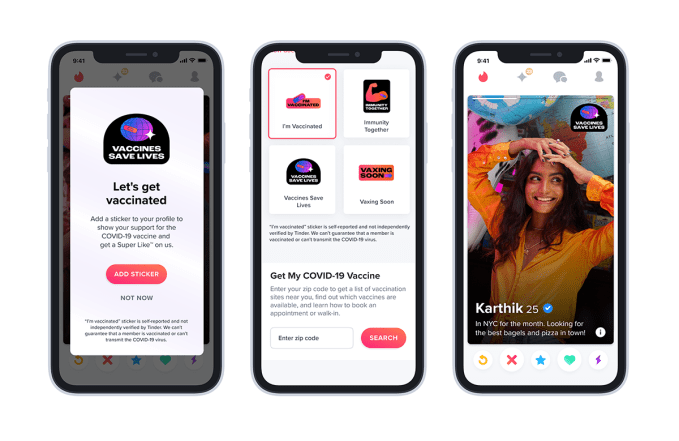
On Tinder, anyone who adds a sticker to their profile promoting their vaccination status between June 2 and July 4 will be gifted a free Super Like. (Proof of vaccination isn’t necessary, but really, you should get vaccinated if it’s available where you live.) Tinder and other apps will also add vaccination site resources from Vaccine.gov to help people figure out where they can get the shot nearby.

“Nothing like fireworks to signal a new spark and a new start for those looking to meet new people IRL this summer,” Tinder CEO Jim Lanzone said.

According to OkCupid, getting vaccinated might help with that. The company found that people who displayed their vaccination status were 14% more likely to find a match. On OkCupid, vaccinated users will get a free boost, a perk that promotes their profile to potential matches. The other apps participating in the White House initiative are handing out their own premium perks to give users a competitive edge.

The effort is part of a push by the White House to get 70% of adults vaccinated by the Fourth of July. To reach more Americans, the Biden administration has also coordinated with popular entertainment companies like NASCAR and country music channel CMT to promote vaccination.

“Social distancing and dating were always a bit of a challenging combination,” White House Senior COVID Advisor Andy Slavitt said during a press event Friday. He characterized the vaccine push through dating apps as those companies “responding to the president’s call to action” rather than calling it an official partnership.

“We have finally found the one thing that makes us all more attractive,” Slavitt said. “A vaccination.”


from Social – TechCrunch https://ift.tt/347qNBS
via IFTTT

5 predictions for the future of e-commerce

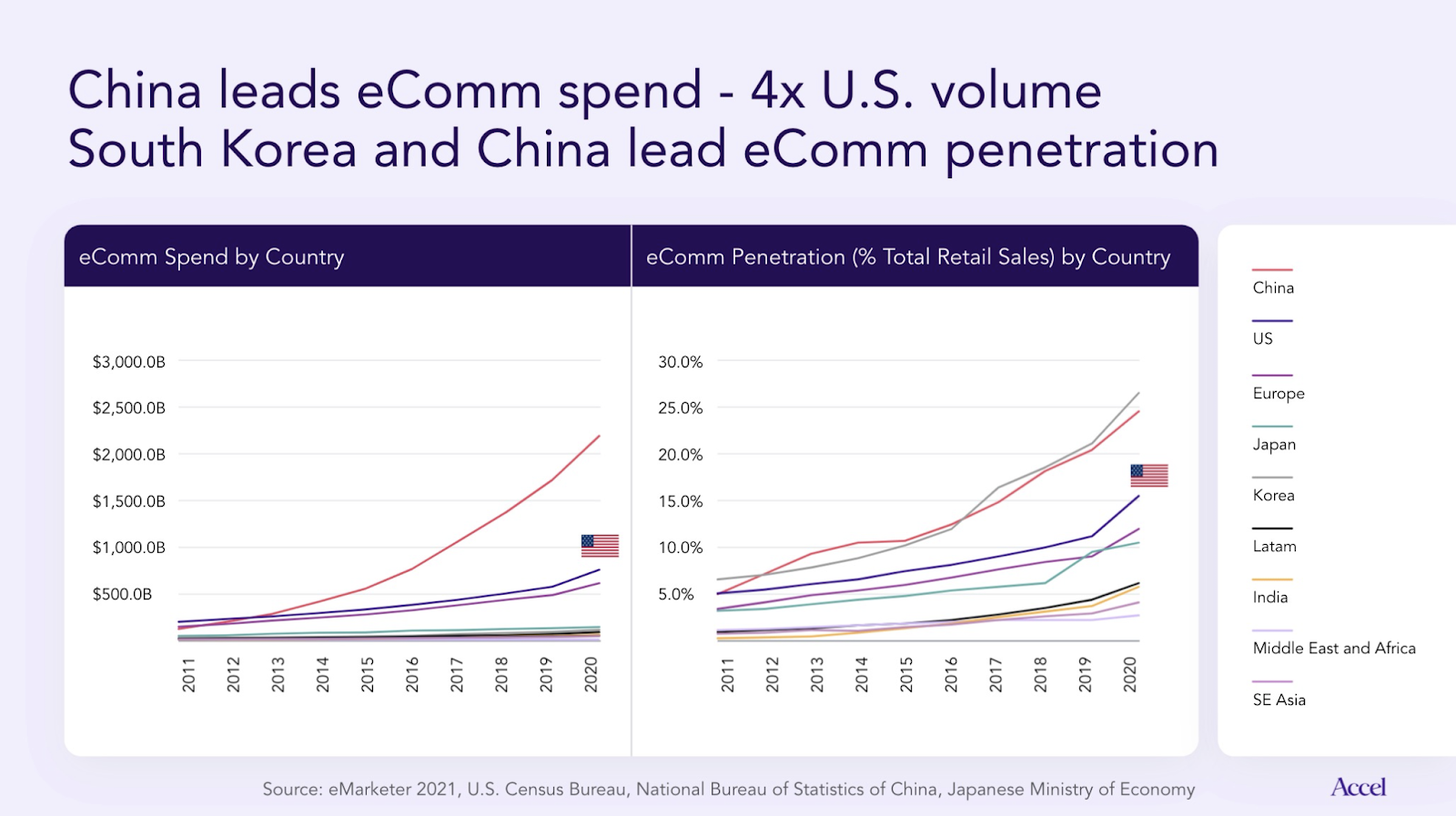
In 2016, more than 20 years after Amazon’s founding and 10 years since Shopify launched, it would have been easy to assume e-commerce penetration (the percentage of total retail spend where the goods were bought and sold online) would be over 50%.

But what we found was shocking: The U.S. was only approximately 8% penetrated — only 8% for arguably the most advanced economy in the world!

We’ve had a close eye on the rate of e-commerce penetration globally ever since. Despite e-commerce growth skyrocketing over the past year, the reality is the U.S. has still only reached an e-commerce penetration rate of around 17%. During the last 18 months, we’ve closed the gap to South Korea and China’s e-commerce penetration of more than 25%, but there is still much progress to be made.

Image Credits: Accel

It’s clear that we are still in the early days of this megatrend and it is our strong conviction that it is inevitable that we will get to a point where at least half of every retail dollar is spent online over the next decade.

Below are five key predictions for what this road to further penetration will hold.

D2C retail will accelerate as merchants seek independence

Marketplaces have forged the path for e-commerce adoption among merchants of all sizes. They have raised significant capital and made the necessary investments in payments and logistics infrastructure, often subsidizing the consumer experience with free shipping or discounts to get them comfortable buying online.

The balance of power has shifted toward merchants, who previously didn’t have the picks and shovels to build their own e-commerce capabilities.

In recent years, merchants have pursued options aside from these marketplace aggregators. They have sought independence, opting to pay 5%-10% of their gross merchandise value (GMV) on their own technology infrastructure rather than paying the 6% to 45% (average of about 15%) in marketplace fees. Most importantly, they have prioritized owning the relationship with their end customers, given that customer loyalty and lifetime value is becoming ever more important in a hypercompetitive online market.


from Social – TechCrunch https://ift.tt/3fFfuGm
via IFTTT

India objects to ‘manipulated’ label on politicians tweets

The Indian government has expressed strong objection to Twitter for classifying certain tweets by Indian politicians as “manipulated media,” according to a notice leaked to journalists Friday.

The notice comes two days after Twitter labeled a tweet from Sambit Patra, the spokesperson of India’s ruling party BJP, as “manipulated media.” In the tweet, Patra had claimed that Congress, the leading opposition party in India, was using a so-called “toolkit” to derail the Indian government’s efforts against the coronavirus pandemic.

The notice didn’t mention any politician by name nor did it identify any tweets.

In the notice, the Indian government said Twitter chose to designate tweets as “manipulated” “prejudicially” even though an investigation hadn’t been conducted, and also “asked” Twitter to remove such tags in the interest of “fairness and equity.”

Twitter’s action, the Indian government said, dilutes its credibility as a “neutral and unbiased” platform as well as puts a “question mark on the status of Twitter as an ‘Intermediary.'” Twitter, Facebook, and any other social media firm with a certain size — over a few million users — are identified as an “intermediary” in India, according to a recently unveiled law, which provisions some of the world’s toughest rules for internet companies.

A spokesperson of Twitter — which has labeled several politicians’ tweets over the years to provide more context or correction, citing news media and independent fact checkers, in many markets — told TechCrunch that the company had no comment.

The new notice underscores the dilemma Twitter faces in India, the world’s second largest internet market, where it has amassed over 100 million users and has also backed local startups.

The Jack Dorsey-led company has had to grappled several tough situations in India this year. After briefly complying with a New Delhi order early this year, the company faced heat from the government for restoring accounts that had posted tweets critical of the Indian government’s policy or the Prime Minister Narendra Modi.

The two faced off again publicly last month after New Delhi ordered Twitter and Facebook to take down posts that were critical of the government’s handling of the coronavirus pandemic.


from Social – TechCrunch https://ift.tt/3u7feWa
via IFTTT

Snap emphasizes commerce in updates to its camera and AR platforms

At Snap’s Partner Summit, the company announced a number of updates to the company’s developer tools and AR-focused Lens Studio, including several focused on bringing shopping deeper into the Snapchat experience.

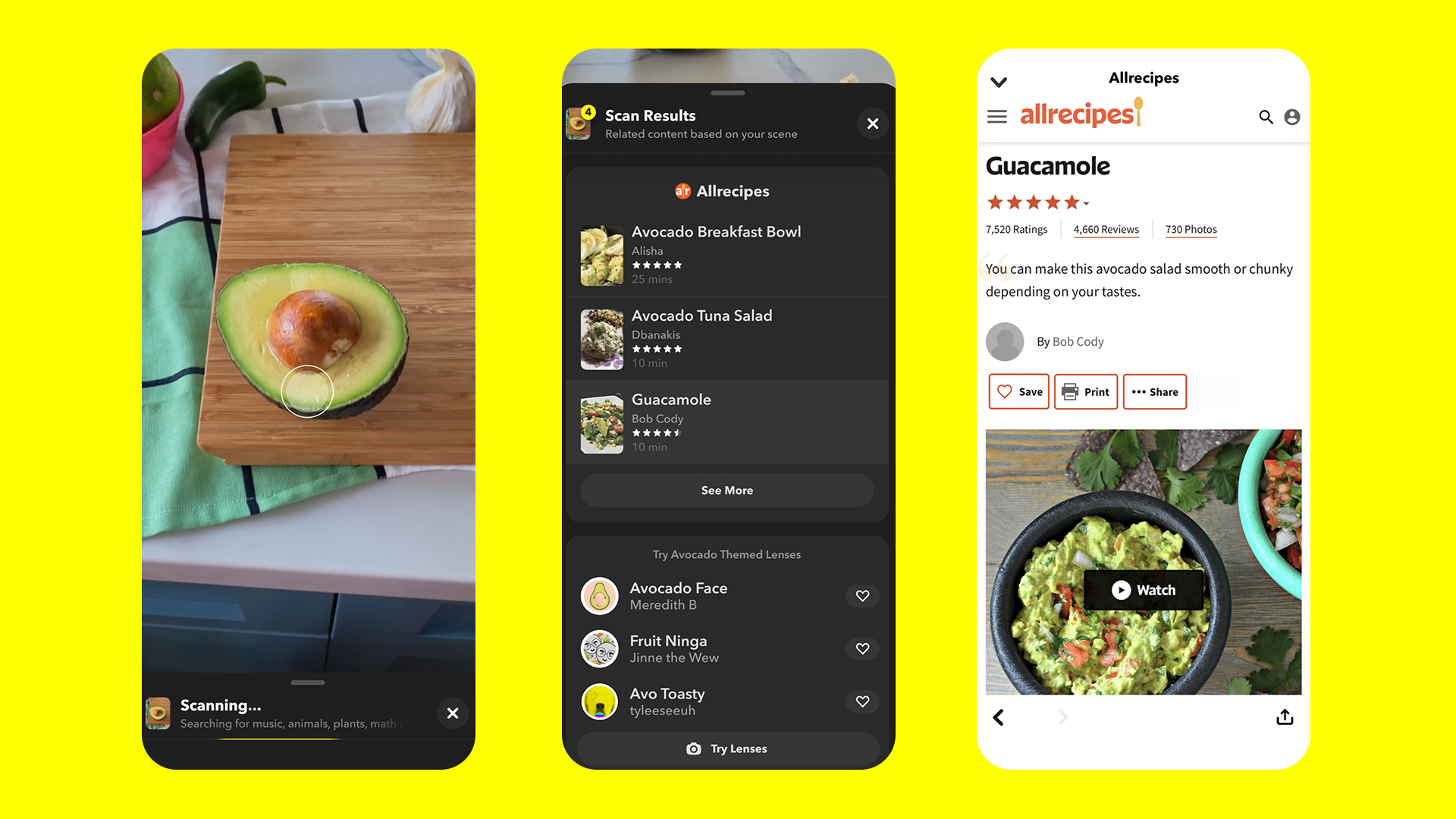
One of the cooler updates involved the company’s computer vision Scan product, which analyzes content in a user’s camera feed to quickly bring up relevant information. Snap says the feature is used by around 170 million users per month. Scan, which has now been given more prominent placement inside the camera section of the app, has been upgraded with commerce capabilities with a feature called Screenshop.

Users can now use their Snap Camera to scan a friend’s outfit, after which they’ll quickly be served up shopping recommendations from hundreds of brands. The company is using the same technology for another upcoming feature that will allow users to snap pictures of ingredients in their kitchen and get served recipes from Allrecipes that integrate them.

The features are part of a broader effort to intelligently suggest lenses to users based on what their camera is currently focused on.

Businesses will now be able to establish public profiles inside Snapchat, where users can see all of their different offerings, including Lenses, Highlights, Stories and items for sale through Shop functionality.

On the augmented reality side, Snap is continuing to emphasize business solutions with API integrations that make lenses smarter. Retailers will be able to use the Business Manager to integrate their product catalogs so that users can only access try-on lenses for products that are currently in stock.

Partnerships with luxury fashion platform Farfetch and Prada will tap into further updates to the AR platform, including technical 3D mesh advances that make trying on clothing virtually appear more realistic. Users will also be able to use voice commands and visual gestures to cycle between items they’re trying on in the new experiences.

“We’re excited about the power of our camera platform to bring Snapchatters together with the businesses they care about in meaningful ways,” said Snap’s global AR product lead Carolina Arguelles Navas. “And, now more than ever, our community is eager to experience and try on, engage with, and learn about new products, from home.”


from Social – TechCrunch https://ift.tt/3wjKrH2
via IFTTT