This is default featured slide 1 title

Go to Blogger edit html and find these sentences.Now replace these sentences with your own descriptions.This theme is Bloggerized by Lasantha Bandara - Premiumbloggertemplates.com.

This is default featured slide 2 title

Go to Blogger edit html and find these sentences.Now replace these sentences with your own descriptions.This theme is Bloggerized by Lasantha Bandara - Premiumbloggertemplates.com.

This is default featured slide 3 title

Go to Blogger edit html and find these sentences.Now replace these sentences with your own descriptions.This theme is Bloggerized by Lasantha Bandara - Premiumbloggertemplates.com.

This is default featured slide 4 title

Go to Blogger edit html and find these sentences.Now replace these sentences with your own descriptions.This theme is Bloggerized by Lasantha Bandara - Premiumbloggertemplates.com.

This is default featured slide 5 title

Go to Blogger edit html and find these sentences.Now replace these sentences with your own descriptions.This theme is Bloggerized by Lasantha Bandara - Premiumbloggertemplates.com.

Why a B2B Marketer Should Think Like a B2C Marketer


  B2B marketers must educate extremely smart potential buyers, ensure that influencers are knowledgeable about their products, and ultimately convince people they should bet their jobs on choosing their products over those of competitors. Moreover, even while sticking to a limited marketing budget, B2B marketers must provide a hungry sales team with enough qualified leads to keep their pipelines full and their families fed.
How do they do it? The best B2B marketers are successful because they start with building a brand. In other words, the best B2B marketers think like business-to-consumer (B2C) marketers.

Think Like a B2C Marketer
The first step toward thinking like a B2C marketer is to create great brand recall. Let's say you're thirsty and you walk into a store that carries Coke and DMG-Cola. You immediately reach for the Coke because you know exactly how it will taste; it is the safe choice. However, if earlier that day you'd seen a banner ad that said "DMG-Cola—Tastes Like Coke, but 100% Organic!" you may well have tried the DMG-Cola. The DMG marketer who bought that banner ad had a simple goal—not to drive someone to make an immediate purchase but, rather, to create brand recall that would influence purchase decisions in the future.
Of course, applying this method to B2B marketing is more challenging, but it can work. First, to illustrate how much more complex the B2B marketer's challenge is, let's use the same example—but in a B2B context.
Your boss asked you to buy soda for a company party, so you go to the store and spot Coke and DMG-Cola on the shelf. Even if you had seen the banner ad marketing DMG-Cola, you'd still choose the Coke. Why? Simply because Coke is the less risky decision, and many purchase decisions in a business environment are made with the goal of minimizing risk. Nobody ever ruined a party by buying Coke, but if you showed up with DMG-Cola and your coworkers didn't like it, you'd take the blame for making a poor decision that had a negative impact on the company party.
So, what would the DMG marketer have to do to convince you, as the business buyer, to choose DMG-Cola instead of Coke?
  • First, she would have to build awareness of the DMG-Cola brand as in the above example.
  • Then, she would have to provide examples and testimonials of others who had thrown successful company parties with DMG-Cola. She might create whitepapers and host webinars highlighting the advantages of DMG-Cola vs. Coke and other competitors.
  • She would also have to influence executives at your company and your trusted peers outside the company, so they would recommend DMG-Cola around the water cooler.
  • Finally, she would have to ensure this information stayed top of mind, so you wouldn't fall back on the "safer path" of reaching for Coke next time you were tasked with planning a company party.
Smart B2B Marketing = B2C With a Twist
Of course, the previous example is simplistic, but that is essentially how B2B products are marketed and purchased every day.
The best B2B marketers think like B2C marketers—but with a twist. They understand building a memorable brand perception is critical, but they also understand...
  • Exactly who the buyer is and who or what influences the buyer
  • The key elements of a purchase decision and how to create messaging that addresses those elements
  • The content, best-practices, and case studies necessary to remove the risk of the decision
  • How to distribute messages and content to targeted decision makers, influencers, and peers with enough frequency to move the needle
And they do all that while staying within budget.
What tips can B2B marketers follow to start thinking more like their B2C colleagues? Here are five strategies B2B marketers can implement right away.
1. Create great brand recall
The first step in any B2B marketing campaign is to create brand messages and campaigns that will "stick with" potential buyers long after they see the ads or marketing messages. Get creative and try new messages and slogans to make your brand stand out from the crowd and target them specifically to your audiences. Finally, always be branding! Creating brand recall isn't a single campaign—it's an always-on tactic.
2. Know your audience
Thinking like a B2C marketer doesn't mean treating your audience like general consumers. Your audience is made up of business professionals looking to make the most economical, risk-averse, and high-value purchases for their companies. Always keep their needs and risks in mind when considering marketing strategies.
3. Use visuals to sell your product
People remember images long after they remember words. Make sure your campaigns are splashy, memorable, and interactive. Try using interactive banners, social ads, or videos to tell your brand story.
4. Maintain creative consistency
Trying new creative ideas is fine, but make sure they're consistent across all your marketing campaigns, including paid ads, social media, sales sheets, webinars, whitepapers, and your website. Synch your messaging across all media activities as you move buyers down the marketing funnel.
5. Be human
Your audience may be businesspeople, but that doesn't mean they are automatons who don't enjoy a good laugh or a personal touch. Make sure all your marketing materials speak to the human side of the business world. In a world where most B2B campaigns are boring, a more human touch will make your campaigns stand out.
* * *
So, next time you meet with your B2B marketer, give him a hug and say "I get it now!" B2B marketers have a rich, complex, and high-pressure job to do in a very dynamic and noisy world. Those who do it well are rewarded with outsized growth and shareholder value gains.
How to become a digital marketing professional?

BY Cláudio Torres

Every month people send me various emails asking me how to become a Digital Marketing Consultant or professional. Thus, I decided to write this post showing the steps to become a Digital Marketing Consultant or professional for those who are interested.
It is an undeniable fact that demand for digital marketing professionals have been increasing much more faster than the offer, and that many times the formal courses didn’t have the time to provide it. Added to that, other marketing, communication and publicity sectors, have been lowering their demand, making the professionals of these sectors to have an interest in migrate to the Digital Marketing.

Basic formation of a Digital Marketing professional

The professional that intends to work with Digital Marketing must have a superior formation (Marketing, Publicity, Communication, Engineering, or Administration). It is possible to become a professional without that formation, but the result can be temerarious. In the past, webdesigners and programmers got into the marketing without any specific formation. The fact is that Digital Marketing is Marketing, a science that comes from Administration, that comes from Engineering. Thus having an academic base in Marketing and Administration is fundamental to the best performance of the activities
.
From this basic formation the professional can develops. There’s no specific curriculum yet of the Digital Marketing professional, and the formal MBA and Post-graduation courses still doesn’t have a curricular schedule created by experience of the manager of each course. This way in many cases, even with a good Post or MBA the professional still finds it difficult to execute his tasks.
In the formation of a Digital Marketing professional you should worry in developing the following competencies:
  • Basic formation in Marketing.
  • Basic knowledge in Planning Methodology and Time Management.
  • Basic Knowledge in Negotiation and Presentation techniques.
  • Digital Marketing formation.
  • Digital Marketing Strategic Planning formation.
  • Basic technical formation based in each one of the Seven Digital Marketing Strategies.
  • Having a work methodology as Digital Marketing Manager or Consultant.
  • Developing a contact web in Digital Marketing.
  • Constant updating through books, articles and blogs.

Where to work with Digital Marketing

To better enjoy your interest in the digital marketing career, you should consider that that are three main positions that you could assume in this market: Digital Marketing Analyst, Digital Marketing Manager and Digital Marketing Consultant.
The Digital Marketing Analyst will work in a company or publicity agency doing digital marketing planning, creating digital marketing campaigns, and implementing these actions, and normally working with a bunch of outsourced (SEO companies, Social Media, Bloggers, Agencies, etc…). This is the most operational position, ideal for young people who wants to learn and obtain experience in this market, and a good path for those who seek a career transition.
The Digital Marketing Manager will work as a company Manager, being the main responsible for the digital marketing planning, the marks control, and the reports to the commercial or marketing Direction. Just like every manager position the ideal is that you already have experience in the market. Independently of your competence as a digital marketing professional, you’ll have to develop competencies in process and people management to perform well your activity.
The Digital Marketing Consultant is the professional that is external to the company or publicity agency, and can work in an independent way or related to consultancy, and that will help the company to develop the digital marketing planning, or the agency to create a digital marketing campaign. He’ll also be able to give digital marketing courses and lectures. This position have much more independence than the previous ones, but the professional must have the spirit of an entrepreneur, because beyond executing his activities, he’ll have to sell his services. This professional, besides acquiring knowledge on digital marketing, will have to create a constant update process, because he’s the company’s counselor, and have a work methodology, that goes beyond planning methodology and digital marketing actions.

Looking for a job in Digital Marketing

Once formed in Digital Marketing you’ll have a second challenge that is getting inside the market. According to the thinking line I developed until here, you first have to decide if you want to seek a position as a Digital Marketing Analyst or Manager or if you want to develop a career as a Digital Marketing Consultant.

One alternative does not exclude the other, but you’ll have to choose in which one of them you’ll begin so you can look for a job as a Digital Marketing professional.

Independently of your choice, your new position as a Digital Marketing professional will depend on a few basic steps. Create your curriculum at LinkedIn, including your specific Digital Marketing formation, an a profile on Facebook. Don’t wait anyone to take you seriously in the Digital Marketing market if you don’t have a solid presence in the Web. The ideal is that you create a Professional Blog (and connected to a Twitter), where you can publish articles connected to your Digital Marketing knowledge. That helps a lot in your exposition, and it is fundamental if your choice is to be a Digital Marketing Consultant.
Once created this base, do your own planning with The Seven Digital Marketing Strategies. Expose yourself. Participate in Facebook and LinkedIn groups, and the daily Buzz on Twitter.
If you want a job as a Digital Marketing Analyst or Manager, start making contacts and friendships, via Facebook, Twitter and LinkedIn, with professionals from agencies and companies that already work in these positions. That will take you quickly to become known. Make it clear that you’re looking for an opportunity, and show your potential with the previous steps.
If you want to be a Digital Marketing Consultant, the first thing you need are clients. In this case, creating a planning with The Seven Digital Marketing Strategies and exposing yourself with your Blog, Twitter, LinkedIn, and Facebook, is fundamental. Besides, getting in touch with agencies or consultancy, can be a good strategy.

The Four Types of Digital Marketer


Your company’s customer-centricity profile reveals the capabilities you need to succeed in digital media, as well as whether you are a leader, scholar, pioneer, or novice in this critical marketing field.

If you are the chief marketing officer (CMO) of a consumer-oriented business — for example, a food manufacturer or a retail bank with a credit card offering — your long-established efforts to reach customers may have come into question over the past few years.
Digital media have changed the advertising and marketing ecosystem; social networks, broadband infrastructure, and new forms of online and offline data collection have transformed the relationships among companies and their customers. But only a few CMOs have fully caught up with these trends. Most companies do not yet have the kinds of capabilities in digital marketing that they need in order to fully engage with customers today.
The term customer centricity is coming into broad use as a way to describe the new marketing orientation made possible by digital media (including, but not limited to, social networks). Under this new orientation, the primary unit of market engagement is no longer the product, the launch, the trade promotion, or the advertising campaign, but the end-to-end consumer experience. Consumers are engaged with the company and each other before, during, and after their purchase.
This requires a high level of integration, the ability to bring together multiple sources of content, data sources, capabilities, and product lines, and to continually refine segmentation approaches, platforms, and online content. This integration needs to cut across the consumer experience, creating a seamless digital marketing link between sales in physical stores and sales through e-commerce.
Nike Inc., for example, has invested heavily in both the media it creates and the media it shares with its consumers. On Nike.com, consumers can find a continually evolving set of software and services generated by the apparel and footwear manufacturer (including training programs for use with interactive game machines such as Microsoft’s Kinect), as well as the new “FuelBand,” worn on the wrist to track and analyze daily movements. Consumers can also access a growing body of links to Facebook pages and Instagram pictures put up by others in the Nike community. Everything on the website is designed in harmony, so that the brand reinforces the idea that the company has the back of the amateur athletes who make up its core audience, and they in turn are regularly drawn back to the experience of not just wearing the products, but using them together.
In the process of developing its digital media strategy, Nike has dramatically lowered its spend on paid media. And by focusing its spending on its own media and socially shared media, the company has broadened and deepened the impact of its brand.
How far along this road is your company — and what capabilities does it need to compete successfully? Answering that question is the purpose of a self-guided, Web-based survey called the Digital Customer Centricity Profiler, recently launched by Booz & Company. The profiler focuses on relationships with consumers and potential consumers, and on companies’ facility (or lack of facility) in engaging them online along their full path to purchase. The profiler takes only about 10 to 15 minutes to complete. It asks about your company’s current practices in social media, data analytics, and e-commerce, and helps you gauge the potential of other practices, of which you may not have been aware. Then, on the basis of your answers and those of your peers (the answers themselves remain private), it classifies your company into one of four categories:
  • Leaders are a small but growing group of companies, including Nike, Burberry, 3M, Apple, L.L. Bean, and Coca-Cola, that have mastered the two main capabilities involved in maintaining an online presence: insights and analysis on the one hand, and platforms and activation on the other.

خرافات حول التسويق باستخدام مواقع التواصل الاجتماعي


هناك العديد من الخرافات  والقواعد الخاطئة في اذهان العملاء والشركات حول حساب العائد على الاستثمار من خلال التسويق باستخدام مواقع التواصل الاجتماعي في هذا المقال ساحاول تفنيدها


أولا (1) :  مواقع التواصل الاجتماعي لن تكلفنا  شئ 
صديقي دعني اقول لك الحقيقة مواقع التواصل الاجتماعي ليست مجانية
 نعم استخدامها في التسويق سيكلفك اقل بكثير من وسائل التسويق والاعلان الاخري لكنها ليست مجانية ابدا 
دعنا نناقش قانون العائد على الاستثمار 
Measuring Social Media ROI image ROIb 300x37 

العائد على الاستثمار= (إجمالي إيرادات الاستثمار– إجمالي تكاليف الاستثمار) \ إجمالي تكاليف الاستثمار

قد تجد ما ساقوله لك الان تحت بند رياضيات الصف الاول  لكنها على اي حال -تصور- الاثبات الرياضي لهذه الحالة  
صفر -صفر /صفر يساوي  ؟؟؟؟؟ ؟؟؟؟؟؟؟ بالطبع صفر
 
ثانيا (2): فقط اخبرنا ما نحتاج ان نقوم بقياسه من كل هذه الاحصائيات وسوف نقوم به
 
مثل الاولى دعني اخبرك بهذا اذا لم يكن لديك اهداف واضحة وقابلة للتحقيق لخطة تسويقك الرقمية فماذا ستقيس ؟ لا يوجد طريقة واحدة لقياس العائد على الاستثمار من التسويق باستخدام مواقع التواصل الاجتماعي راجع اهداف ورؤية الشركة العامة  وحدد اي من هذه الاهداف قد تستطيع مواقع التواصل الاجتماعي المساعدة على تحقيقها في الاغلب تساهم مواقع التواصل الاجتماعي في اقسام ( خدمة العملاء , المبيعات , العلاقات العامة , التسويق 
 
ثالثا (3):  سنكون شركة مواكبة للعصر اذا اصبح لدينا صفحة على الفيس بوك او حساب على تويتر
  صدق او لاتصدق لن تصل الي شئ ابدا من خلال صفحة فيس بوك وحساب تويتر
الحقيقة انك تحتاج لان تركز على الافراد لا علي الصفحات
ماهي القيم التي اوالسياسات التي وضعتها لموظفين التسويق الرقميين هل تتضمن قيم النزاهة والصبر في الرد على العملاء هل طورتهم بشكل كافي لكي يستطيعوا فهم المجتمع الرقمي هل لديهم الادوات والبرامج التي تستطيع  جمع العديد من مواقع التواصل الاجتماعي في واجهة واحدة هل لديهم ادوات او برمجيات متطورة لقياس ردود افعال العملاء على علامتك التجارية هل استثمرت بشكل كافي فى برامج التسويق الرقمي الحديثة؟
    
رابعا (4):فقط ضع المحتوي وانساه وسوف ينتشر وحده
التسويق الرقمي عموما والتسويق في مواقع التواصل الاجتماعي يختلف تماما عن طرق الاعلان العادية والتي تضع فيها اعلانا في احدى الشوارع او في قناة تليفزيونية وتنتظر ان يدق هاتف شركتك
مواقع التواصل الاجتماعي تتطلب نوع اكبر من الالتزام والتواجد سيتطلب منك الوقت الكافي لبناءمجتمع رقمي قوي وسيتطلب منك الالتزام بالتواجدوالرد والتحدث مع عملائك بشكل متواصل   
 
 
 خامسا (5): لدينا موقع الكتروني جيد مواقع التواصل الاجتماعي للترفيه  الحقيقة ان عصر الموقع الالكتروني الجيد قد ولي موقعك الاكتروني يعتبر كاصل من اصولك الرقمية اما مواقع التواصل الاجتماعي فهيا السوق ذاته حيث تحتوي على منافذ البيع ( صفحة او حساب العلامة التجارية )و تحتوي ايضا على العملاء 

How Google Glass Could Change Advertising | Mashable

It's 2015 and you've just arrived back in New York City from a weekend trip. You're standing in Times Square when it occurs to you that you're hungry. So, literally in the blink of an eye, you call up information about all the nearby restaurants. You realize, however, that you could also use some companionship so you say "friends nearby restaurants." Just then you see that a pal of yours has checked in to Fannelli Cafe in SoHo. You quickly text him and arrange to meet. When you call up directions, you get an offer for $2 off your first Guinness. All thanks to Google Glass.
No, that's not an officially sanctioned use for Google's ambitious pair of Internet-connected spectacles. In fact, Google has stressed repeatedly that there will be no ads on Google Glass. "There are no plans for advertising on this device," says a Google rep. "We’re more interested in making the hardware available."
But ad execs can dream. Those who make their living via augmented reality have even more vivid dreams. For them, Google Glass isn't some weird 20% project, it's the future of advertising. "Stop thinking of [augmented reality] as a business. It's a browser," says John Havens, founder of the H(app)athon Project. "If this was 1992 and I told you there was something called a web browser that was going to change advertising, would you believe me? Yet that's what happened."
That may not be just wishful thinking. If Google Glass and its imitators take off, it could literally change the way we see the world and the way we interact with brands. Just as the Internet completely overhauled marketing over the past 20 years or so, so can the "Outernet." In the process we'll move a step away from the arms-length relationship we consumers have had with brands and a step closer to a consumer-brand mind meld.
Is this possible? Those who are bullish on Google Glass point to the revved up adoption rates of new technologies. As Flurry Analytics reported last August, smartphones have taken off 10 times faster than the 80s PC revolution, two times faster than the 90s Internet boom and three times faster than the social networking revolution. "If we go back look at how fast things are adopting lately compared to 10 to 15 years ago, we're looking at [mass adoption in] 2015 or 2016," says Andrew Couch, CEO of Candy Lab, an AR provider.
Before we explore the fever dreams of AR ad execs though, a few caveats: One is that the idea of everyone in the late 2010s walking around with Sergey Brin's favorite piece of eyewear seems a little unrealistic. Who, beyond hardcore techies, would want to sport such a look? And even if Google Glass inevitably becomes indistinguishable from regular glasses, who would want to go through life surveying the world like the Terminator? Another is that Google hasn't given out much information about Google Glass. The company plans to launch an API for the device at some point and Google is looking to include phone functions, email and calendar features, but that's about it.
For argument's sake, however, let's assume that Google Glass does take off and that it has everything advertisers are looking for. Now that the Outernet has really become a thing, how will we be carrying out our lives? How will brands inevitably colonize this new frontier? Here are a few potential scenarios:
Coupon Offers
The idea of using Google Glass to scout nearby friends for an impromptu lunch date isn't fantastical at all. In fact, the technology already exists. Last June, Facebook released a "Find Friends Nearby" feature that it quickly took down because of copyright concerns. That may not be the only reason, though. Another issue with the feature is that it could also be a tool for stalking.
But Couch says Google can get around such privacy concerns if people opt in like they do with Foursquare check-ins. And one motivation to opt in would be discounts. Imagine, for instance, if you get a third meal free if you bring two friends. As the Guinness example shows, such offers can be triggered by a search for directions. The result would be something of an ideal scenario for advertisers — getting in front of a consumer just as they're ready to buy your product or a rival product.
Personalized Ads
In their current incarnation, billboards are a blunt instrument. An ad for a female-skewing product like makeup will alienate about 50% of the population. An ad in a high-traffic area like an airport is likely to be aimed at a broad group of people who fit under the heading of "business traveler" even though you don't fit that description.
But what if the ads you saw were different than the person next to you? What if, like the ads you see online, they are based on a composite sketch of you created by all the searches you've done and the websites you've visited? In other words, what if you looked up and instead of seeing an ad for something you would never buy — like women's shoes — you saw an ad reminding you of that Amazon search you did a few days ago?
Dave Elchoness, co-founder and CEO of Tagwhat, takes the idea further: "You can even monetize vertical," he says. "You'd see something different if you look up at a 45-degree angle than you would if you look straight up." (As Havens has previously pointed out, there's currently no restriction on such "virtual air rights;" two or more brands can occupy the same space, though what you'll see depends on who you are and what technology you're using.)
Elchoness acknowledges that these kind of literally in-your-face ads may not appeal to everyone. "With the current approach, you can sort of ignore a banner ad," he says. Another obstacle is that behavioral data. Apple's iOS doesn't allow for tracking of third-party cookies, meaning that an advertiser can't follow your path on the web. Google allows for third-party tracking, but the technology is new and advertisers are still just figuring it out. Still, consumers might decide that they don't mind being tracked if they're served up more relevant ads. On the other hand, they might find the whole thing creepy.
Where does this leave traditional billboards? Likely they'd remain as they are for some time, just as newspapers coexist with the web. However, over time, they'd become less relevant and effective. After all, you don't need a physical billboard to project the AR ads that Elchoness refers to.
Game-ification of Everyday Life
It's one thing to play Mario Bros., but what about living it? "What if you were Mario?" asks Couch. In this scenario, you might be walking down the street when you get an invitation to open a box or grab a medallion. Doing either allows you to earn points in a game to, say, get a free coffee at the Seattle's Best coffee shop, which happens to be just a few feet away.
As far-fetched as this may seem, Cachetown, a unit of Candy Lab, is already offering such games. However, with those you have to use your smartphone or tablet. The video below outlines how such programs work. Though it takes creative license at one point and lets the girl see the objects without a phone, tablet or Google Glass, Couch says that with Google Glass it would be pretty much the same. "Take the tablet out of that girl's hand and have [Google Glass] on her face. How much more fun would that be?"

مقدمه عن التسويق الرقمي

ما هو التسويق عبر الإنترنت او التسويق الرقمي؟

كتبه ملاذ المدني

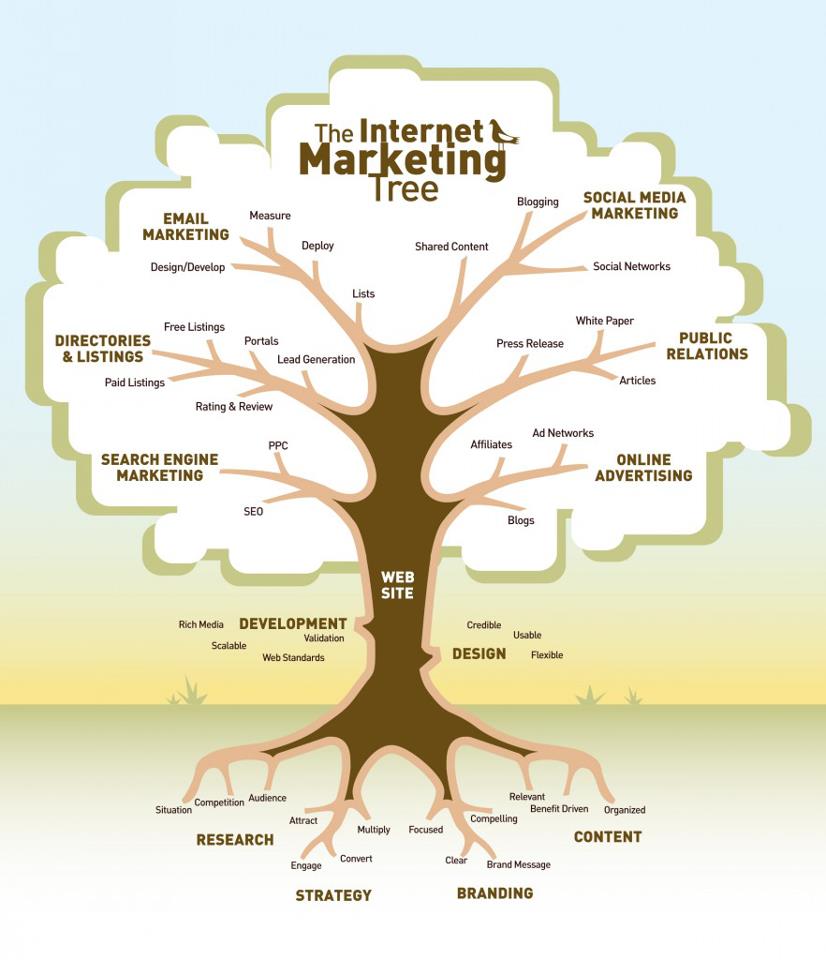
لطالما كنت أجد صعوبة بالغة في الإجابة عن هذا السؤال بطريقة شاملة و مختصرة, حتى وقع نظري مؤخراً على هذه المعلومات المصورة التي تجسد فحوى التسويق عبر الإنترنت أو التسويق الإلكتروني بكل جوانبه على شكل شجرة…! و الحقيقة أن السبب الرئيسي الذي دعاني لكتابة هذه المقالة الطويلة هو ملاحظتي بأن معظم الناس ترى بأن التسويق عبر الإنترنت يتوقف على استخدام فيسبوك و الإعلانات على المواقع و تحسين محركات البحث…الخ … نعم أتفق مع هؤلاء الناس و لكن الى حد معين… فالحقيقة أن ما ذكر هو عبارة عن قنوات التسويق الإلكتروني أو الأغصان كما في هذه الصورة و لا يمثل مفهوم التسويق الإلكتروني برمته…دعونا نتعرف على شجرة التسويق الإلكتروني في هذه المقالة التي نتمنى أن تنال اعجابكم


التسويق الالكتروني

.


الجذور

Research  البحث
يمثل البحث الخطوة الأساسية لبداية أي مشروع ربحي سواء كان تقليدياً أو على الويب, و تبدأ هذه الخطوة بالتعرف على غاية الموقع أو المنتج …ما هي المشكلة التي يحلها الموقع أو المنتج للزبائن أو المستخدمين؟ ما هو هدف الموقع؟ ….صدقني إن الإجابة على هذه الأسئلة يمثل وضع حجر الأساس لبداية رحلة ناجحة لمشروعك التجاري على الويب.
يأتي فيما بعد دور التعمق في عملية البحث السوقي و الإجابة على العديد من التساؤلات… كوضع المنافسة بشكل عام و موصفات جمهور الزبائن … أين سوف يقف الموقع تجاه المواقع المنافسة؟… من هم جمهور المستهلكين أو المستخدمين؟ ما هي سلوكياتهم على الويب’ ما هي المواقع التي يرتادونها, ما هي أعمارهم,اهتماماتهم, أماكنهم, جنسياتهم؟ … الخ.


Strategy  الإستراتيجية

تضمن الإستراتيجية الواضحة تحقيق أهداف مشروعك التجاري و ذلك من خلال تقسيم السوق إلى قطع صغيرة بناء على نتائج البحث السوقي الذي ذكرناه و من ثم التركيز على استهداف القطع السوقية الواعدة أو الأكثر ميلاً لإستخدام او شراء منتجك.
1- ابدأ بتعريف الجوانب الفريدة التي تمّيز منتجك عن باقي المنتجات في السوق و التي تدفع زوار الموقع بالنهاية الى تحقيق الأهداف التي تبتغيها USPs Unique selling Point
2- فكر بميزات جديدة لا تتواجد لدى المنافسين يمكن اضافتها الى منتجك و بأقل التكاليف ( خدمات التوصيل المجانية, تغليف مميز, نكهات جديدة..الخ)
3- فكر بالطرق التي قد تزيد من تفاعل الزبائن مع منتجك ( مثال: خصم x% على كل صديق يتم احالته)

….الإستراتيجية الناجحة في التسويق عبر الإنترنت تقوم على ايجاد الحلول التي تهدف الى زيادة عدد مرات الـ Conversions أو تحول الزائر الى زبون و ذلك من خلال إظهار نقاط البيع الفريدة لموقعك USPs التي قمت بتعريفها.
 
Content  المحتوى
المحتوى هو الملك, لا أدري من قال هذه الجملة و لكنني سمعتها كثيراً…بكل الأحوال، المقصود بالمحتوى، الرسالة التي تودّ أو توصلها للزبائن و التي يجب ان تكون متناغمة مع الإستراتيجية التي قد توصلت اليها.
حاول ان تبرز نقاط البيع الفريدة لمنتجك و لكن في نفس الوقت لا تتحول الى رجل مبيعات !… حافظ على نسبة ”الـ 20: 80″ الشهيرة و التي تعني أن 80% من المحتوى يركزّ على المعلومة و على الحلول التي يقدمها المنتج والـ 20% المتبقية على الرسالة الترويجية.
 
  Branding  اشهارالعلامة التجارية 
و هي عملية دائمة الإستمرارية و لا تحدث في ليلة و ضحاها وهي نتيجة لجهود تسويقية ناجحة قد تستمر لسنوات و لكنها تؤدي بالنهاية الى ترسيخ معنى العلامة التجارية و شكل شعارها في أذهان المستهلكين.
الحقيقة أننا لا نستطيع الإكتفاء ببعض الكلمات لشرح معنى العلامة التجارية! لذا دعونا نكتفي بالإشارة الى الأساسيات كاختيار اسم و شعار جذاب يسهل تذكره من قبل الزبون, أيضا يجب أن تتضمن عملية اشهار العلامة التجارية التركيز على ربط الحاجة التي يسدها منتجك أو موقعك باسمك التجاري…

الجذع

Development التطوير و التصميم Design :
الموقع هو جذع شجرة التسويق عبر الإنترنت و المكان الذي يتعرف الزبائن من خلاله على منتجك… فحال كل موقع يحمل غاية تجارية هو كحال أي محل تجاري, فكما الرفوف و الواجهة و الإضاءة و الأرضية …الخ جميعها عوامل تساهم في تسويق المحال التجارية فإن السرعة و التصميم الجيد و البوصلة السهلة هي أيضاً عوامل أساسية لأي موقع الكتروني ربحي.
سرعة تحميل الموقع و خلوه من الأخطاء من ناحية الأكواد المستخدمة مع وجود نظام سهل لإدارة المحتويات Content Management System قادر على التحكم بمعظم أجزاء الموقع بالإضافة الى التصميم الجذاب و سهولة التصفح ….جميعها عوامل مهمة تساعد على تحقيق الغاية الربحية … فبدون تحقق أي من هذه العوامل لا يوجد داعي أصلاً لصرف الأموال على قنوات التسويق الإلكتروني التي سوف نتكلم عنها.

الأغصان

و هي القنوات التسويقية للموقع و التي يتجلى دورها في جلب الزبائن الى المحل التجاري! و غالباً ما تحمل هذه القنوات في طياتها معنى العلامة التجارية و الجوانب المميزة للموقع أو المنتج للجمهور المستهدف, وتختلف أهمية استخدام هذه القنوات حسب نوع المنتج أو الموقع.
  Online advertisingالإعلان الرقمي
و هو مشابه جداً للإعلانات التقليدية و يقوم فيها المعلن بشراء مساحة اعلانية أو مرات ظهور
من موقع آخر و عادة ما يكون الموقع المُعلن فيه متعلق الى حد ما بالمنتج المراد تسويقه, و الغاية من هذه الإعلانات هو جلب الزوار و تحويل هؤلاء الزوار الى زبائن كنتيجة نهائية.
هناك أنواع عديدة من الإعلانات الرقمية, كالبرامج الإعلانية Affiliate Programmes, الراوبط النصية الإعلانية, و المدون الضيف…الخ

 Social Media الإعلام الإجتماعي
و يهدف التسويق عبر هذه القناة الى الوصول الى الجمهور المستهدف من خلال مواقع الشبكات الإجتماعية كالفيسبوك, تويتر جوجل بلس اليوتيوب…الخ, و يعتمد التسويق بواسطة الإعلام الإجتماعي على بناء مجموعات إجتماعية مهتمة بالعلامة التجارية و ذلك من خلال مخاطبة الجمهور المستهدف عن طريق مشاركة محتويات مثيرة للإهتمام كالمعلومات المصورة, تدوينات, فيديوهات, كتب الكترونية.

Search Engine Marketing  التسويق عبر محركات البحث

هناك نوعين من قنوات التسويق عبر محركات البحث, النوع المجاني SEO و الذي يهدف الى زيادة ظهور الموقع المراد تسويقه على صفحات نتائج محرك البحث SERPs و يعتمد هذا النوع من التسويق على فهم خوارزميات محرك البحث و انتاج محتويات ذات جودة عالية بشكل دائم و استجلاب روابط من مواقع أخرى و الإلتزام بإرشادات محركات البحث في هذا المجال و الكثير الكثير من العوامل الأخرى … بسبب تعقيدات هذا النوع من التسويق, تلجئ معظم الشركات الى توظيف خبير أو الإستعانة بشركات متخصصة في هذا المجال.
النوع الثاني من أنواع التسويق عبر محركات البحث هو النوع المدفوع و هو عبارة اعلان نصي يظهر أعلى صفحة نتائج البحث و على الجهة اليمنى (اذا كنت تستخدم جوجل العربي), و عادة مايدفع المعلن على كل نقرة على الإعلان في صفحة نتائج البحث.بمعنى آخر, يطلب المعلن من محرك البحث اظهار اعلانه عند بحث المستخدمين على كلمات مفتاحية معينة يختارها المعلن نفسه.

 Email Marketing التسويق عبر الإيميل

تعتمد هذه القناة التسويقة على ارسال نشرات بريدية أو محتويات اعلانية الى ايميلات الجمهور المستهدف. من المفضل أخلاقياً و مهنياً عند استخدام هذا النوع من التسويق الحصول عى موافقة مسبقة من الجمهور المستلم لهذه الإيميلات وتوفير طريقة سهلة لالغاء الاشتراك بهذه الخدمة..

   Public Relation العلاقات العامة

و عادة ما تعتمد الشركات الكبرى و الرائدة في مجال معين على هذا النوع من القنوات التسويقية و تقوم بنشر البيانات الصحفية في المواقع الإخبارية بالإضافة الى الإعتماد على وكالات العلاقات العامة الإلكترونية لنشر أخبارها.
أخيرا أود التكلم عن التحليل Analytics و أدوات التتبع كجوجل أناليتكس و سايت كاتاليست و غيرها و التي هي باعتقادي الشخصي أهم جانب في التسويق عبر الإنترنت… و التي من خلالها يستطيع المسّوق أن يحدد ثمار الأموال التي صرفت على الحملة الإعلانية ROI و بشكل دقيق جدا, بخلاف التسويق التقليدي و الذي يعتمد غالباً على مقارنة ايرادات المشروع التجاري قبل و بعد طرح الحملة الإعلانية و التي غالبا ما تفتقر الى الدقة.
بواسطة أدوات التتبع التي تقدمها الكثير من الشركات ( جوجل أناليتكس,سايت كاتاليست… الخ), يستطيع المّسوق الإلكتروني تحليل رد فعل المستهلك تجاه الإعلان و تتبع حركة المستهلك على الموقع و تتيع مصاريف الحملة الإعلانية و مقارنتها بالإيرادات يوم بيوم.
بهذا أكون انتهيت من تلخيص فحوى التسويق الإلكتروني… أعتذر منكم عن طول هذه المقالة و أتمنى ان تكونو قد استفدتم من المعلومات التي أوردتها, و حال كان لديكم أي سؤال, فأنا جاهز للإجابة من خلال التعليقات أدناه.

The Rise of the T-Shaped Agency Model

By Daniel Lemin 

Agency owners, take note: your traditional team structure – the one that divides your agency into “digital”, “account management” and “creative,” among others – may be restraining capacity to innovate and expand your client capabilities.
We work with a lot of agencies and have come to recognize the challenges that leaders are facing in today’s hyper-competitive market. There are smaller agencies that have specialized knowledge in one content area or social technology. There are larger agencies that have built labyrinthine digital teams with varying capabilities, making it hard to assess one agency’s true stripes over another. It’s mind-boggling how much has changed in the agency business in the last 5-10 years and we know how hard it is compete. There are no easy solutions to any of the business challenges and it can feel like you throw good money after bad by chasing new technologies as a service offering.

What is the T-Shaped Agency?

We have been talking this year about a concept – borrowed from the early years of digital agency business models – we call the T-Shaped Agency. This is a framework for agency owners and leaders to consider as they look to invest in staff education on new technologies, package that expertise into concise service offerings that clients will understand and don’t feel filled with hype and jargon, and – get this – actually deliver on the work in a profitable and consistent manner.

How Does the T-Shaped Agency Work?

T-Shaped Agency Architecture
tshaped1 1024x765 The Rise of the T Shaped Agency Model
The T-Shaped Agency concept is effective when there is recognition by agency owners that their traditional model of building, pricing and delivering a service to clients is misaligned with the need for rapid and articulate innovation in their client work. Let me build a metaphor for you to frame this concept.
Think of an agency as a software package, like Microsoft Office. Clients like to purchase an Office Suite; they know they will need word processing, spreadsheets, presentation software and possibly some other add-ons that make a packaged suite very enticing as a model. It’s fairly expensive to purchase all of this software and not every employee will want or need it, but it provides an easy solution for work productivity. Over time, the need for new features in that software changes and, slowly, the software manufacturer pushes out updates to the software which requires installation and deployment by IT teams and certainly does not put critical new features in the hands of employees quickly. It’s a slow model that does not evolve quickly.
Contrast that with newer open-source web-based software services like OpenOffice. These platforms – also available as a software suite, similar to Microsoft Office – provide immediate access to new features and fast deployment of updates without a lengthy installation process. Because it’s based on open-source software, it can take advantage of a community of knowledge – some of which may be very specialized – and new features can emerge rapidly that will be useful to a large number of its customers. This is similar to the T-Shaped Agency model that we’re describing here.
Agencies are filled with vast amounts of intelligence, and while employees may have line-item duties for specific skills – like creative, web development, account management – they may also have a knowledge of a specific technology that no other employee can match. Perhaps they are a weekend warrior on HTML5 development, or a passionate video producer looking for an outlet for their creative talents. The point is these skills exist within an agency and it’s difficult to put a description on them as a service offering; to say you have a video SEO product or a WordPress guru is a bit too specific for most agency engagements. But, clients crave those skills. So you have to adapt your ability to identify who those content experts are and allow them some lateral freedom to put their skills to use. Employees love it because they feel that they’re being valued for the unique insights they have about a specific topic. Clients love it because they feel the agency “gets it” and is able to deliver consistent innovative ideas and actually get them done. Of course, many scenarios will require an agency to look beyond its own walls for specific expertise, but having an internal champion of that technology, platform or concept will still be a valuable asset.

Deploying the T-Shaped Structure

How do you go about deploying this structure? It does not have to be a watershed moment. You can start informally surveying employees and asking them what areas interest them. For some, providing a small time or training allowance to bolster their existing knowledge of a topic will be a great incentive. For others, just the chance to show off their talent and contribute to the agency’s success is enough. You can expand the concept by crafting incentives for participation and, slowly, you’ll begin to see a natural evolution in how your teams are thinking about innovation for their clients. Clients will begin to notice too, and they’ll begin to see that your agency is evolving out of the Microsoft Office mindset and adapting an open approach to innovation.
Are you using the T-Shaped Agency structure in your business?